Products Description of Imidazole CAS#288-32-4
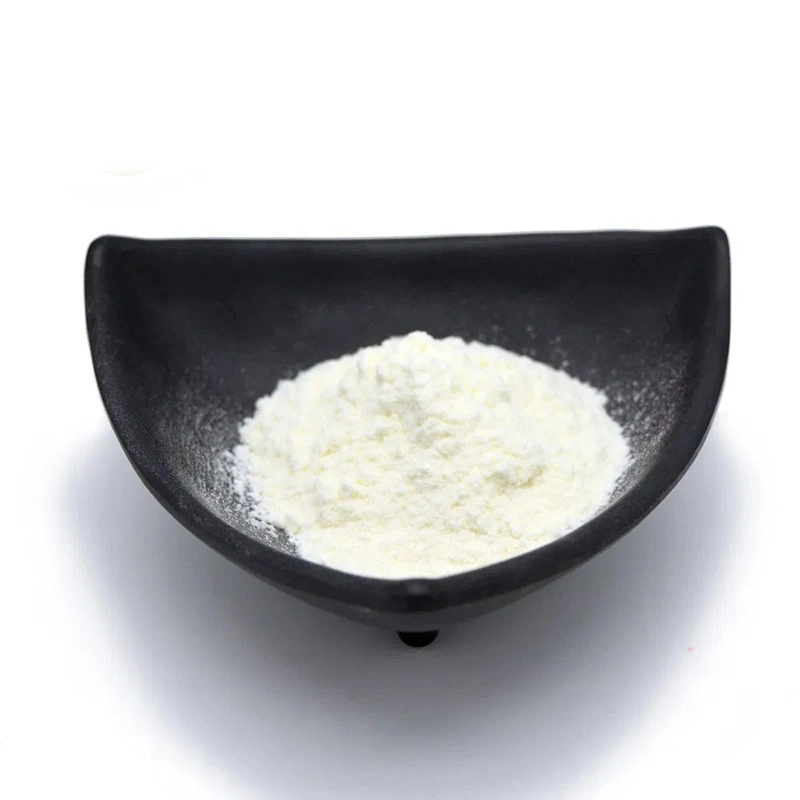
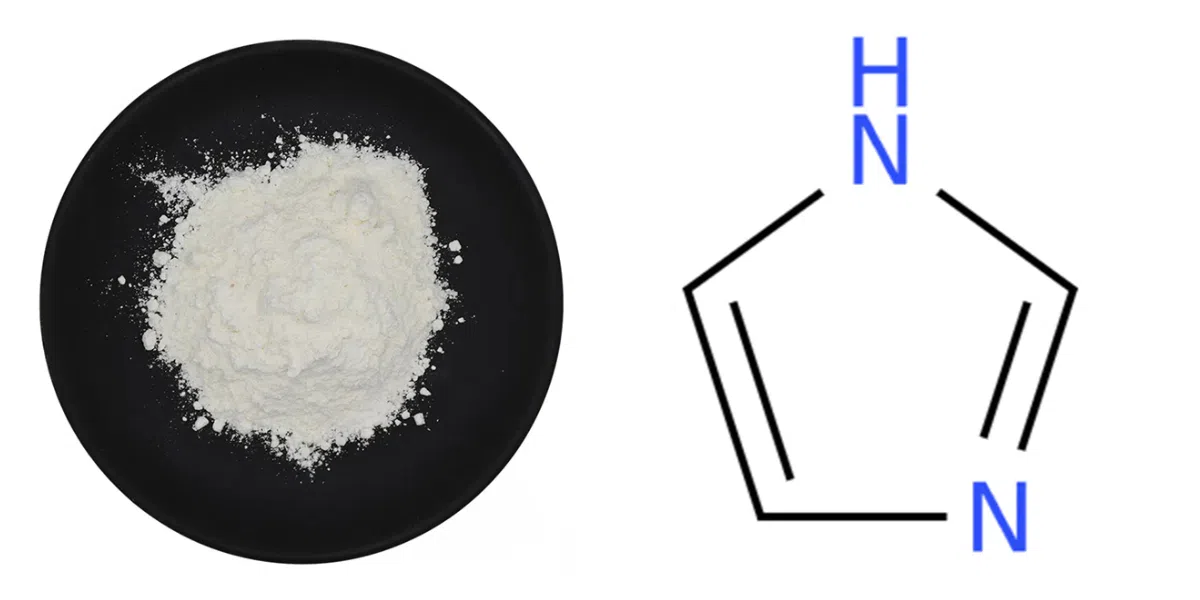
Imidazole (molecular formula: C₃H₄N₂) is an organic compound of the diazole family. It is a five-membered aromatic heterocycle containing two non-adjacent nitrogen atoms in its ring. The lone pair of electrons on the nitrogen at the 1-position participates in cyclic conjugation, lowering the electron density of that nitrogen and allowing the hydrogen attached to it to be readily released as a proton.Imidazole exhibits both acidic and basic properties and can form salts with strong bases. Its chemical behavior combines characteristics of pyridine and pyrrole. In biological systems, the imidazole ring is a crucial structural component of the amino acid histidine, where it acts as an acyl-transfer group involved in lipid hydrolysis and plays a significant catalytic role in enzymatic reactions. Imidazole derivatives are widely distributed in living organisms and hold greater importance in scientific research and industrial applications than imidazole itself, with notable examples including compounds related to DNA and hemoglobin.
Imidazole Chemical Properties
| Melting point | 88-91 °C(lit.) |
| Boiling point | 256 °C(lit.) |
| density | 1.01 g/mL at 20 °C |
| vapor pressure | <1 mm Hg ( 20 °C) |
| refractive index | 1.4801 |
| Fp | 293 °F |
| storage temp. | Store below +30°C. |
| solubility | H2O: 0.1 M at 20 °C, clear, colorless |
| pka | 6.953(at 25℃) |
| form | crystalline |
| color | white |
| Specific Gravity | 1.03 |
| Odor | Amine like |
| PH Range | 9.5 - 11 |
| PH | 9.5-11.0 (25℃, 50mg/mL in H2O) |
| Water Solubility | 633 g/L (20 ºC) |
| Sensitive | Hygroscopic |
| λmax | λ: 260 nm Amax: 0.10 |
| λ: 280 nm Amax: 0.10 | |
| Merck | 144912 |
| BRN | 103853 |
| Dielectric constant | 23.0(Ambient) |
| Stability: | Stable. Incompatible with acids, strong oxidizing agents. Protect from moisture. |
| InChIKey | RAXXELZNTBOGNW-UHFFFAOYSA-N |
| LogP | -0.02 at 25℃ |
| CAS DataBase Reference | 288-32-4(CAS DataBase Reference) |
| NIST Chemistry Reference | 1H-Imidazole(288-32-4) |
| EPA Substance Registry System | Imidazole (288-32-4) |
| Hazard Codes | C,Xi,T |
| Risk Statements | 36/38-63-34-22-20/21/22-61 |
| Safety Statements | 26-36/37/39-45-22-36-27-53 |
| RIDADR | UN 2923 8/PG 3 |
| WGK Germany | 1 |
| RTECS | NI3325000 |
| Autoignition Temperature | 480 °C |
| TSCA | Yes |
| HazardClass | 8 |
| PackingGroup | III |
| HS Code | 29332990 |
| Hazardous Substances Data | 288-32-4(Hazardous Substances Data) |
| Toxicity | LD50 in mice (mg/kg): 610 i.p.; 1880 orally (Nishie) |
Product Application of Imidazole CAS#288-32-4
Imidazole is slightly more basic than pyrazole and readily forms stable salts, such as picrates and nitrates. One of its significant applications is in the purification of His-tagged proteins via immobilized metal affinity chromatography (IMAC).
In this process, His-tagged proteins selectively bind to nickel ions immobilized on the chromatography resin. An elution buffer containing imidazole is then employed to compete with the His tag for binding to the nickel ions, thereby releasing the target protein from the column and enabling its collection with high purity.