Products Description of Antimony Triacetate CAS#6923-52-0
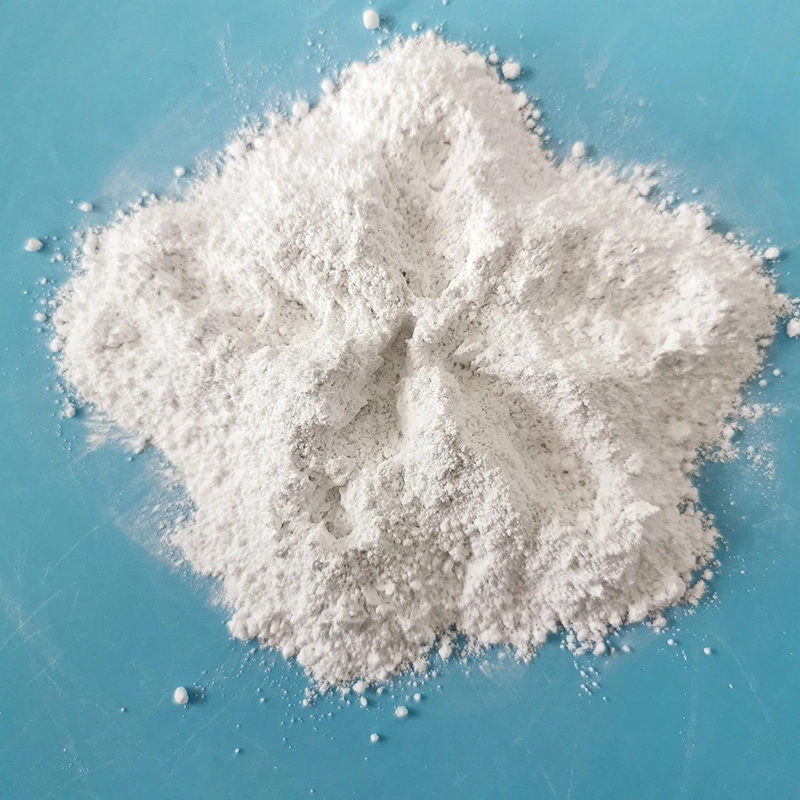
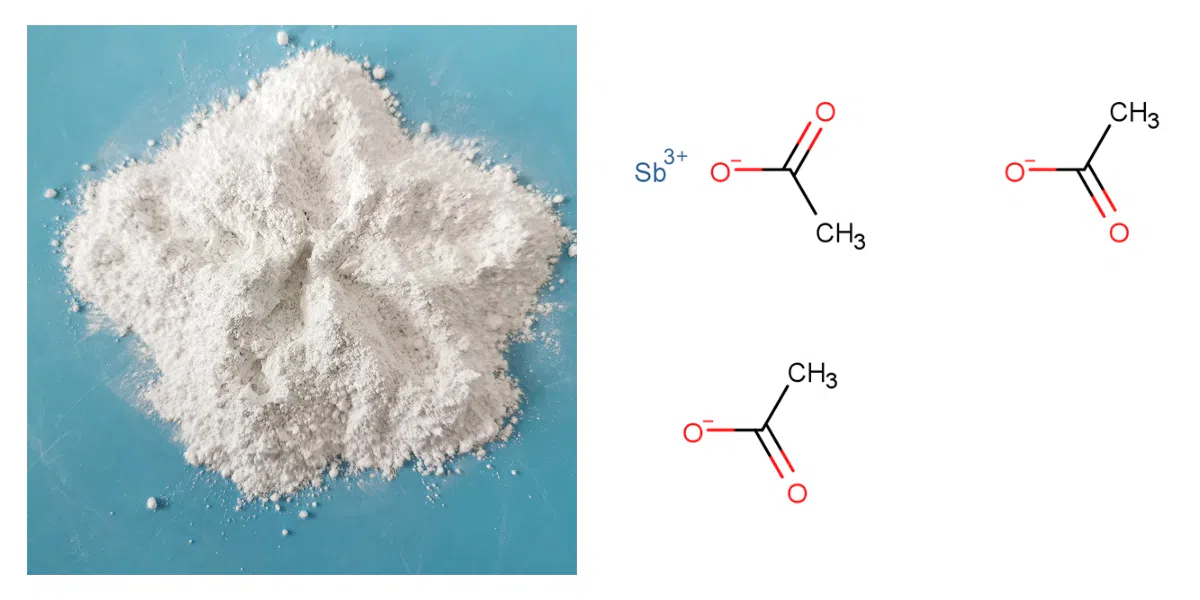
Antimony(III) acetate (Sb(CH₃CO₂)₃) is an antimony-based chemical. It takes the form of a white powdered solid, is moderately soluble in aqueous systems, and finds regular application as a polymerization catalyst in the polyester industry.
Antimony triacetate Chemical Properties
| Melting point | 126-131 °C (lit.) |
| density | 1.22 g/mL at 25 °C (lit.) |
| form | Powder |
| color | off-white |
| Specific Gravity | 1.22 |
| Water Solubility | Decomposes in water |
| Sensitive | Moisture Sensitive |
| Hydrolytic Sensitivity | 7: reacts slowly with moisture/water |
| Exposure limits | ACGIH: TWA 0.5 mg/m3 |
| NIOSH: IDLH 50 mg/m3; TWA 0.5 mg/m3 | |
| InChIKey | JVLRYPRBKSMEBF-UHFFFAOYSA-K |
| EPA Substance Registry System | Antimony triacetate (6923-52-0) |
Safety Information
| Hazard Codes | C,N,Xn |
| Risk Statements | 20/22-34-51/53 |
| Safety Statements | 26-36/37/39-45-61 |
| RIDADR | UN 3262 8/PG 3 |
| WGK Germany | 2 |
| RTECS | AF4200000 |
| TSCA | Yes |
| HazardClass | 6.1 |
| PackingGroup | III |
Product Application
Antimony triacetate (CAS 6923-52-0, molecular formula C₆H₉O₆Sb) is a high-purity organoantimony industrial compound, with its core industrial applications detailed below:
Polyester Polycondensation Catalyst (Primary Application)
It serves as the standard high-efficiency catalyst for PET (polyethylene terephthalate) polymerization in the synthetic fiber and polyester resin industries. Compared with antimony trioxide, it features superior solubility in ethylene glycol, higher catalytic activity, shorter polycondensation cycle, and effectively avoids pipeline blockage during production, significantly improving the quality of final polyester products .Plastics & Textiles Flame Retardant Additive
It is widely used as a synergistic flame retardant in engineering plastics and textile materials, working in tandem with halogenated flame retardant systems to enhance the thermal stability and fire resistance performance of finished products .Fine Chemical & Pharmaceutical Intermediate
It acts as a critical synthesis reagent in the production of specialty dyes, organoantimony compounds, and targeted pharmaceutical intermediates, supporting the manufacturing of high-value fine chemical products .Special Polymer Modification Additive
It is applied in the production of high-performance polyester films and food-grade packaging materials, helping to optimize the molecular weight distribution of polymers and improve the mechanical strength and transparency of final products.
This industrial-grade product typically has a purity of ≥98%, with antimony content controlled at 40%~41%, and requires moisture-proof sealed storage to prevent hydrolysis into antimony trioxide and acetic acid .