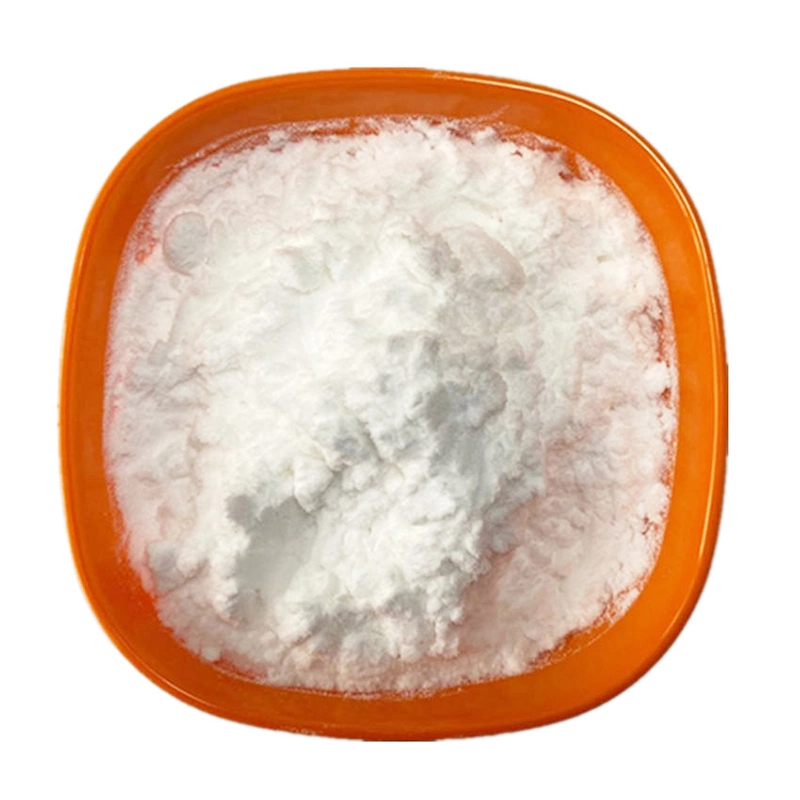
Sorbic Acid CAS#110-44-1
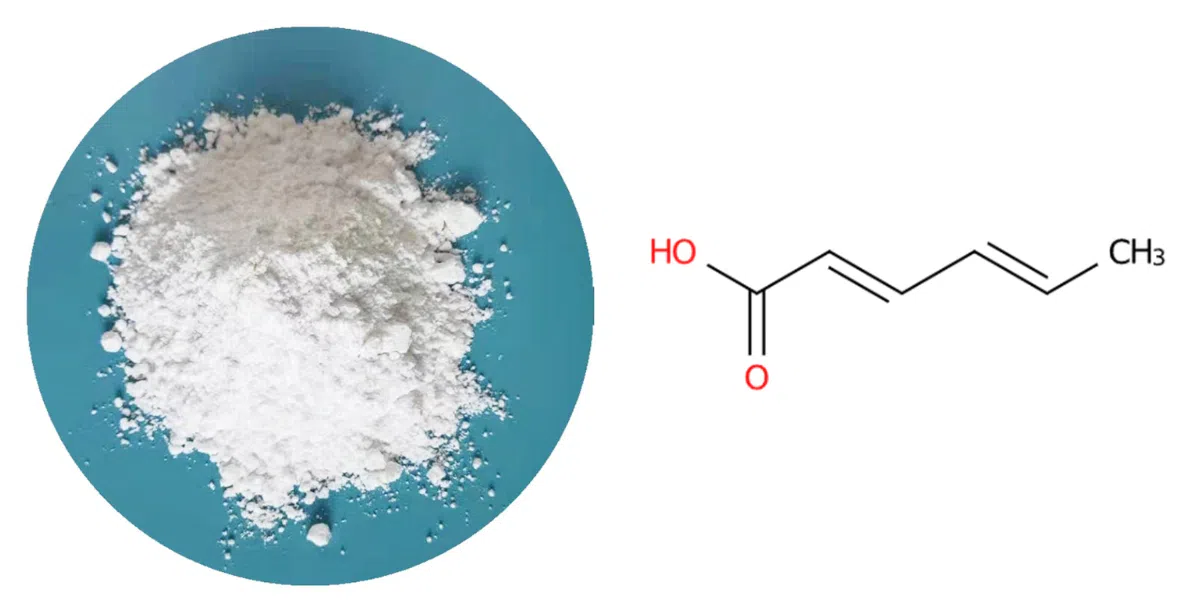
With a molecular formula of C₆H₈O₂, sorbic acid is a food additive also known as 2,4-hexadienoic acid, 2-propenyl acrylic acid, or herbal tea acid. It exhibits potent inhibitory effects against a variety of fungal organisms, particularly yeasts and molds. While it is widely used in food preservation, its utility also spans animal feed, cosmetic products, pharmaceuticals, packaging materials, and rubber additives.
Sorbic acid Chemical Properties
| Melting point | 132-135 °C (lit.) |
| Boiling point | 228°C |
| density | 1.2 g/cm3 at 20 °C |
| vapor pressure | 0.01 mm Hg ( 20 °C) |
| refractive index | 1.4600 (estimate) |
| FEMA | 3921 | 2,4-HEXADIENOIC ACID, (E,E)- |
| Fp | 127 °C |
| storage temp. | 2-8°C |
| solubility | ethanol: 0.1 g/mL, clear |
| pka | 4.76(at 25℃) |
| form | Crystalline Powder |
| color | White or cream-white |
| Odor | bland |
| PH | 3.3 (1.6g/l, H2O, 20°C) |
| biological source | synthetic |
| Water Solubility | 1.6 g/L (20 ºC) |
| Merck | 148721 |
| JECFA Number | 1176 |
| BRN | 1741831 |
| Henry's Law Constant | 3.3×101 mol/(m3Pa) at 25℃, Abraham and Jr. (2019) |
| Stability: | Material saturated with this acid may ignite spontaneously. Incompatible with strong oxidizing agents. May be light sensitive. |
| Major Application | cleaning products |
| cosmetics | |
| flavors and fragrances | |
| food and beverages | |
| personal care | |
| Cosmetics Ingredients Functions | PRESERVATIVE |
| FRAGRANCE | |
| InChI | 1S/C6H8O2/c1-2-3-4-5-6(7)8/h2-5H,1H3,(H,7,8)/b3-2+,5-4+ |
| InChIKey | WSWCOQWTEOXDQX-MQQKCMAXSA-N |
| SMILES | C\C=C\C=C\C(O)=O |
| LogP | 1.32 at 20℃ |
| CAS DataBase Reference | 110-44-1(CAS DataBase Reference) |
| NIST Chemistry Reference | 2,4-Hexadienoic acid, (E,E)-(110-44-1) |
| EPA Substance Registry System | Sorbic acid (110-44-1) |
Safety Information
| Hazard Codes | Xi |
| Risk Statements | 36/37/38-36/38 |
| Safety Statements | 26-36-24/25 |
| WGK Germany | 1 |
| RTECS | WG2100000 |
| F | 8 |
| Autoignition Temperature | >130 °C |
| TSCA | TSCA listed |
| HS Code | 29161930 |
| Storage Class | 11 - Combustible Solids |
| Hazard Classifications | Eye Irrit. 2 |
| Skin Irrit. 2 | |
| Hazardous Substances Data | 110-44-1(Hazardous Substances Data) |
| Toxicity | LD50 orally in rats: 7.36 g/kg (Smyth, Carpenter) |
Product Application of Sorbic Acid CAS#110-44-1
Sorbic acid is a low-toxicity, broad-spectrum preservative that provides effective control against molds and yeasts, but has moderate sensitizing properties when used in leave-on cosmetic formulations. Its typical concentration range is 0.1% to 0.3%, and its preservative activity is largely dependent on the formulation's pH level.
In the cosmetic industry, sorbic acid may be used in place of glycerin in emulsions, ointments, and various cream products. It can be obtained either naturally—from the berries of mountain ash and rowan trees—or through synthetic manufacturing methods.
While it is extensively employed as a preservative, sorbic acid may be irritating to the skin of some users.