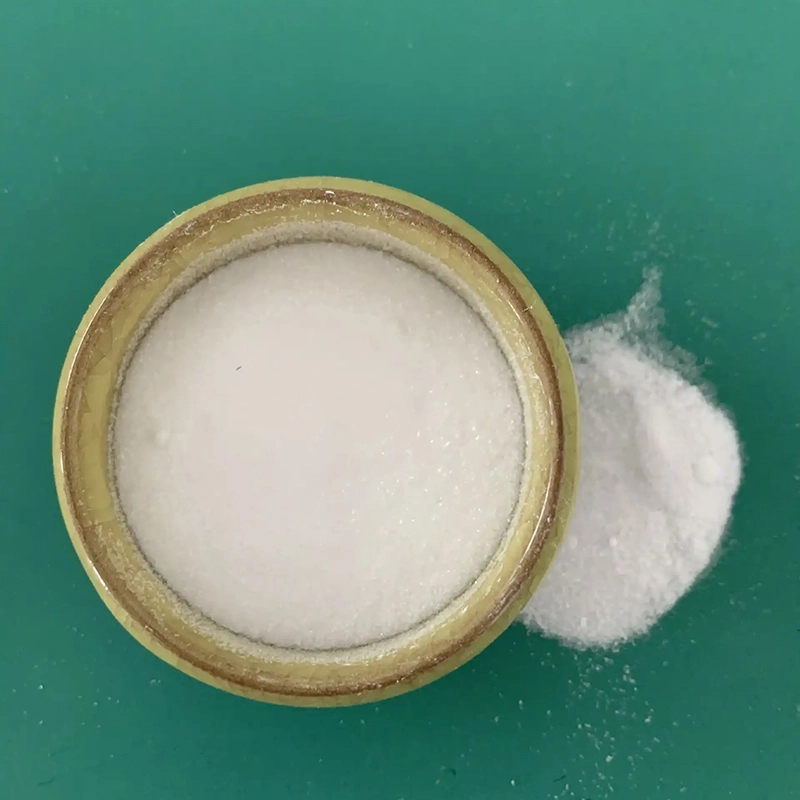
Sodium Acetate CAS#127-09-3
Sodium acetate (CH₃COONa) is the sodium salt of acetic acid, presenting as a colorless, deliquescent crystalline solid. It is a highly versatile compound with broad utility across industrial, laboratory, and commercial sectors.
In textile processing, sodium acetate is employed to neutralize waste streams containing sulfuric acid and can also function as a photoresist when used in conjunction with aniline dyes. Within the construction industry, it acts as a concrete sealant to help mitigate water-induced deterioration. In food processing, it is widely utilized as a seasoning additive.
Sodium acetate is also extensively applied as a buffering agent in laboratory settings. Additionally, it plays a key role in heating pads, hand warmers, and hot ice systems, owing to its ability to store and release heat.
In the laboratory, sodium acetate may be prepared by reacting acetic acid with sodium carbonate, sodium bicarbonate, or sodium hydroxide. On an industrial scale, it is typically produced through the reaction of glacial acetic acid with sodium hydroxide.
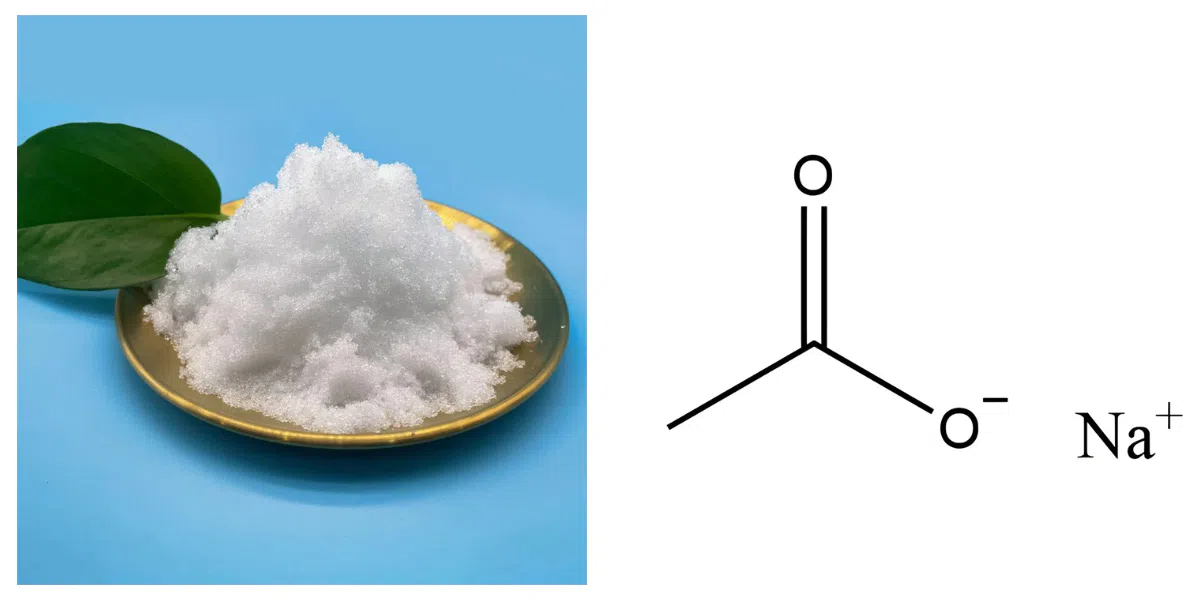
Sodium acetate Chemical Properties
| Melting point | >300 °C (dec.)(lit.) |
| density | 1.01 g/mL at 20 °C |
| FEMA | 3024 | SODIUM ACETATE |
| refractive index | 1.464 |
| Fp | >250 °C |
| storage temp. | Store at +5°C to +30°C. |
| solubility | H2O: 3 M at 20 °C, clear, colorless |
| pka | 4.756[at 20 ℃] |
| form | powder |
| color | white |
| Specific Gravity | 1.45 |
| Odor | Slight acetic acid |
| PH | 7.87(1 mM solution);8.33(10 mM solution);8.75(100 mM solution);9.04(1000 mM solution) |
| PH Range | 8.5 - 9.9 at 246 g/l at 25 °C |
| Odor Type | odorless |
| biological source | synthetic |
| Water Solubility | 500 g/L (20 ºC) |
| λmax | λ: 260 nm Amax: 0.03 |
| λ: 280 nm Amax: 0.02 | |
| Sensitive | Hygroscopic |
| Hydrolytic Sensitivity | 0: forms stable aqueous solutions |
| Merck | 148571 |
| Boiling point | >400°C(decomposition) |
| BRN | 3595639 |
| Stability: | Stable. Incompatible with strong oxidizing agents, halogens. Moisture sensitive. |
| Cosmetics Ingredients Functions | BUFFERING |
| FRAGRANCE | |
| InChI | 1S/C2H4O2.Na/c1-2(3)4;/h1H3,(H,3,4);/q;+1/p-1 |
| InChIKey | VMHLLURERBWHNL-UHFFFAOYSA-M |
| SMILES | [Na+].CC([O-])=O |
| LogP | -3.72 |
| CAS DataBase Reference | 127-09-3(CAS DataBase Reference) |
| NIST Chemistry Reference | Sodium ethanoate(127-09-3) |
| EPA Substance Registry System | Sodium acetate (127-09-3) |
| Absorption | ≤0.01 at 260nm in H2O at 100mM |
| ≤0.01 at 280nm in H2O at 100mM |
Safety Information
| Safety Statements | 22-24/25 |
| WGK Germany | 1 |
| RTECS | AJ4300010 |
| F | 3 |
| Autoignition Temperature | 607 °C |
| TSCA | TSCA listed |
| HS Code | 29152200 |
| Storage Class | 11 - Combustible Solids |
| Hazardous Substances Data | 127-09-3(Hazardous Substances Data) |
| Toxicity | LD50 orally in Rabbit: 3530 mg/kg LD50 dermal Rabbit > 10000 mg/kg |
Product Application of Sodium Acetate CAS#127-09-3
Sodium acetate is widely used as a mordant in dyeing processes. It is also applied in photography, as a food additive, in the purification of glucose, for preserving meat, in leather tanning, and as a dehydrating agent. In analytical chemistry, it is frequently employed in the preparation of buffer systems.
In food processing, sodium acetate functions as a preservative for processed meat products and is often combined with other acid-type preservatives, such as lactates and propionates, to boost its antimicrobial activity. The typical addition level falls between 0.2% and 0.5%. Moreover, it is commonly added to products including salad dressings and convenience meals.