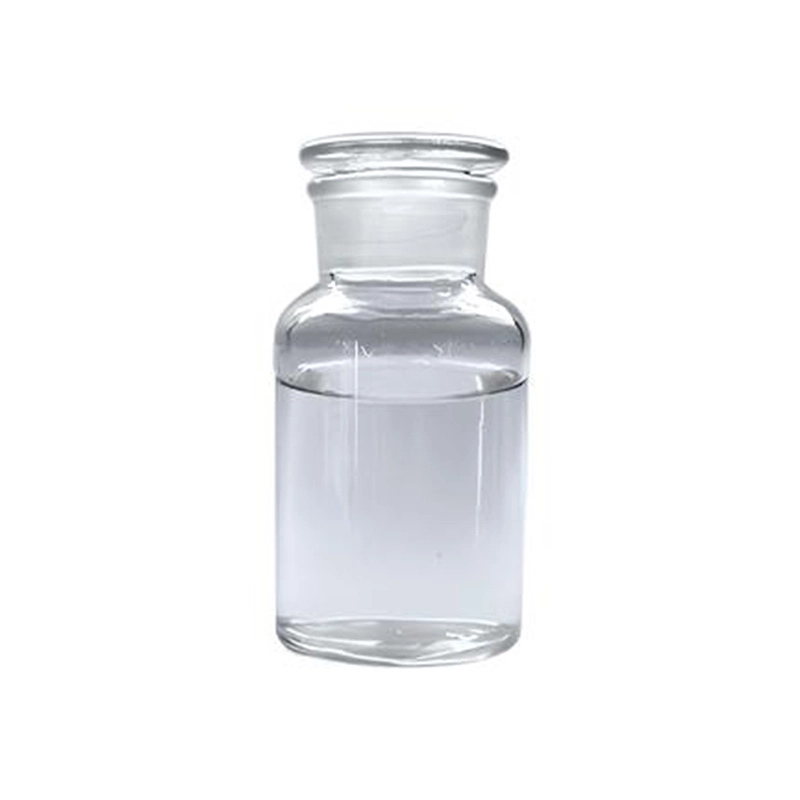
Propylene Carbonate CAS#108-32-7
Cyclic carbonates include five-membered, six-membered, and seven-membered ring structures, as well as macrocyclic varieties containing more than seven ring atoms. Among these, propylene carbonate and ethylene carbonate are the most commonly employed.
Ethylene carbonate is a highly effective polar solvent characterized by a high boiling point, and it also serves as a key raw material in the production of surfactants. It finds extensive use across a range of industries, including plastics, textile printing and dyeing, polymer synthesis, gas separation, and electrochemical applications.
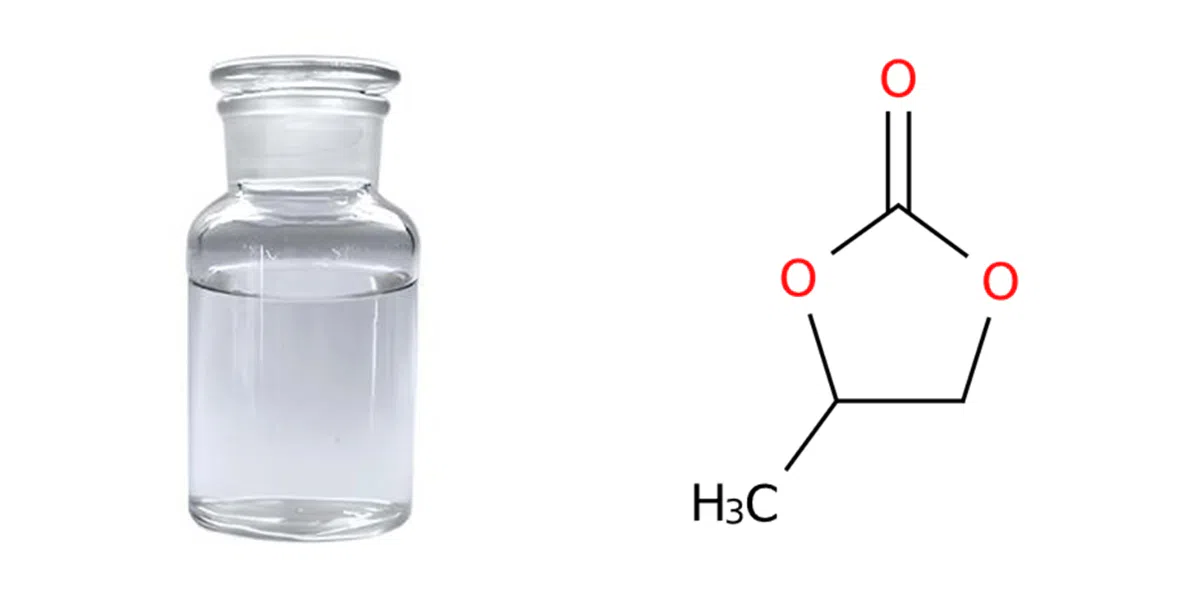
Chemical Properties
| Melting point | -55 °C (lit.) |
| Boiling point | 240 °C (lit.) |
| density | 1.204 g/mL at 25 °C (lit.) |
| vapor pressure | 0.13 mm Hg ( 20 °C) |
| refractive index | n20/D 1.421(lit.) |
| Fp | 270 °F |
| storage temp. | Store below +30°C. |
| solubility | 240g/l |
| form | Liquid |
| pka | 3.92[at 20 ℃] |
| Specific Gravity | 1.209 (20/4℃) |
| color | Clear |
| PH | 7.0 (200g/l, H2O, 20℃) |
| Relative polarity | 6 |
| Odor | odorless |
| explosive limit | 1.8-14.3%(V) |
| Water Solubility | 240 g/L (20 ºC) |
| λmax | λ: 235 nm Amax: 1.00 |
| λ: 280 nm Amax: 0.50 | |
| λ: 300 nm Amax: 0.30 | |
| λ: 350 nm Amax: 0.05 | |
| λ: 375-400 nm Amax: 0.01 | |
| BRN | 107913 |
| Henry's Law Constant | 2.9×10² mol/(m3Pa) at 25℃, Duchowicz et al. (2020) |
| Dielectric constant | 64.4(Ambient) |
| Stability: | Stable. Incompatible with strong oxidizing agents, acids, bases, reducing agents. Protect from contact with moist air or water. |
| Major Application | food and beverages |
| Cosmetics Ingredients Functions | SOLVENT |
| VISCOSITY CONTROLLING | |
| InChI | 1S/C4H6O3/c1-3-2-6-4(5)7-3/h3H,2H2,1H3 |
| InChIKey | RUOJZAUFBMNUDX-UHFFFAOYSA-N |
| SMILES | CC1COC(=O)O1 |
| LogP | -0.41 at 20℃ |
| CAS DataBase Reference | 108-32-7(CAS DataBase Reference) |
| NIST Chemistry Reference | Propylene carbonate(108-32-7) |
| EPA Substance Registry System | Propylene carbonate (108-32-7) |
Safety Information
| Hazard Codes | Xi |
| Risk Statements | 36 |
| Safety Statements | 26-37/39 |
| WGK Germany | 1 |
| RTECS | FF9650000 |
| F | 46091 |
| Autoignition Temperature | 851 °F |
| TSCA | TSCA listed |
| HS Code | 29209010 |
| Storage Class | 10 - Combustible liquids |
| Hazard Classifications | Eye Irrit. 2 |
| Hazardous Substances Data | 108-32-7(Hazardous Substances Data) |
| Toxicity | LD50 orally in Rabbit: > 5000 mg/kg LD50 dermal Rabbit > 20000 mg/kg |
Product Application of Propylene Carbonate CAS#108-32-7
As a versatile compound, propylene carbonate is commonly employed to dissolve synthetic fibers and a wide array of polymer materials. Its utility extends to roles as an extraction medium, a plasticizer for improving material flexibility, and a processing aid in diverse industrial and chemical manufacturing processes.