Product Details
Pimaricin, also widely recognized as natamycin (its official International Nonproprietary Name), is a 100% natural antifungal ingredient manufactured through a professional fermentation process using Streptomyces natalensis strains. As a member of the macrolide polyene family of antifungals, it is a trusted clinical treatment for fungal keratitis, a common eye infection caused by pathogenic fungi. In medical scenarios, it delivers reliable performance against a full range of fungal infections induced by Candida, Aspergillus, Cephalosporium, Fusarium and Penicillium. For the food industry, it serves as a highly popular natural preservative that effectively prevents unwanted fungal contamination and extends product shelf life. Its unique dual-action working mechanism works in two complementary ways: it first attaches to ergosterol on the fungal cell membrane, breaking the normal ergosterol-dependent vacuole and membrane fusion processes to stop fungal growth, and then disrupts the function of membrane transport proteins to block the uptake of essential nutrients like amino acids and glucose by fungal cells.
| Product Name: | Natamycin |
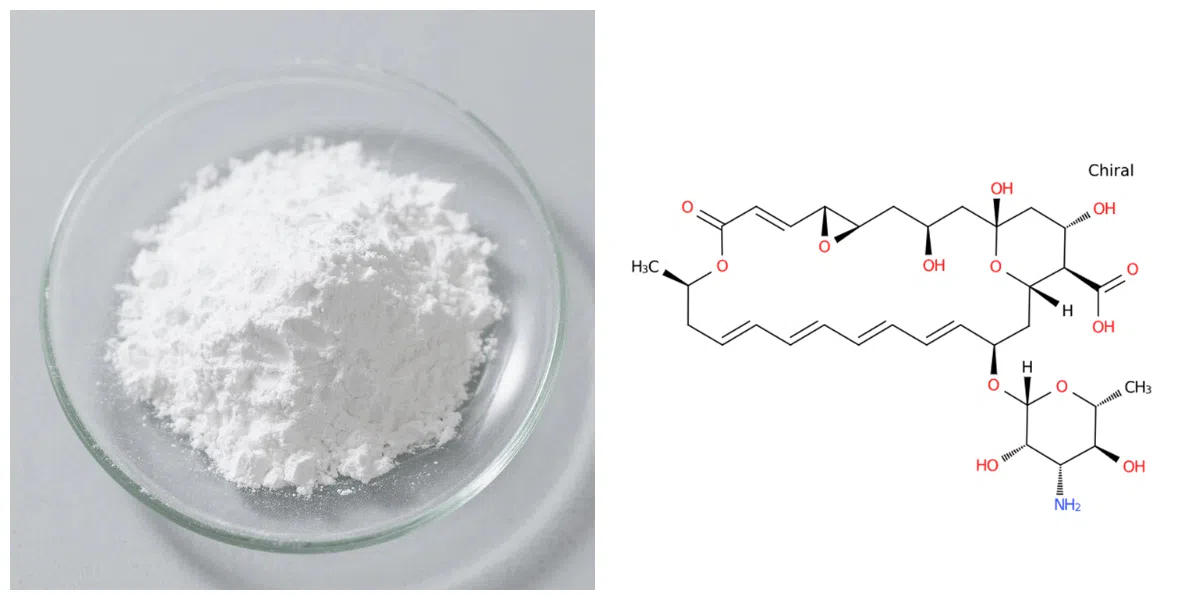
| Synonyms: | NataMycin, A 5283, Delvolan, Delvocid, Myprozine, Natacyn, Natafucin, PiMafucin, PiMafugin, A5263, CL 12625, E235;Natamycin(FermentionProcess);(1R*,3S*,5R*,7R*,8E,12R*,14E,16E,18E,20E,22R*,24S*,25R*,26S*)]-22-[(3-Amino-3,6-dideoxy-β-D-mannopyranosyl)oxy]-1,3,26-trihydroxy-12-methyl-10-oxo-6,11,28-trioxatricyclo[22.3.1.05,7]octacosa-8,14,16,18,20-pentaene-25- carboxylic acid;NATAMYCIN;PIMAFUCIN;PIMARICIN;PIMARICIN, STREPTOMYCES CHATTANOOGENSIS;antibiotica-5283 |
| CAS: | 7681-93-8 |
| MF: | C33H47NO13 |
| MW: | 665.73 |
| EINECS: | 231-683-5 |
| Product Categories: | Food additives;Food & Feed ADDITIVES;Antifungal (Topical);Intermediates & Fine Chemicals;Pharmaceuticals;ERGOSTAT;antibiotic;raw materials;Food additive;7681-93-8 |
| Mol File: | 7681-93-8.mol |
Natamycin Chemical Properties
| Melting point | 2000C (dec) |
| Alpha | D20 +278° (c = 1 in CH3COOH) |
| Boiling point | 952℃ |
| Density | 1.0 g/mL at 20 °C(lit.) |
| Bulk density | 200kg/m3 |
| Refractive index | 1.5960 (estimate) |
| Fp | >110°(230°F) |
| Storage temp | Keep in dark place,Inert atmosphere,2-8°C |
| Solubility | Soluble in DMSO |
| Form | Aqueous suspension |
| Pka | PKa 4.6(50% aq. MeOEtOH) (Uncertain);8.35 (Uncertain) |
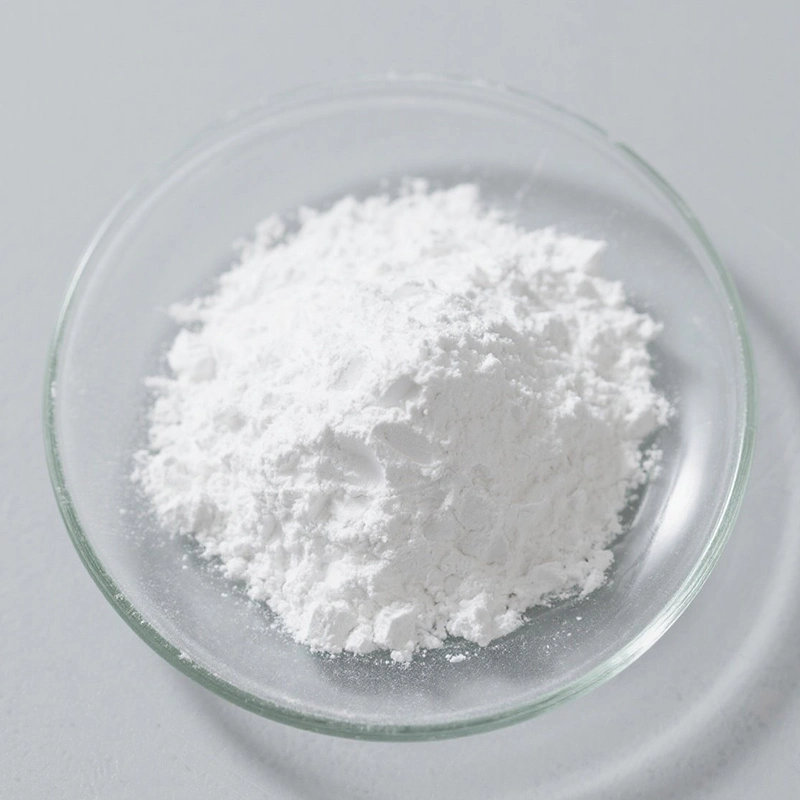
| Color | Cream colored |
| Water Solubility | 0.41g/L(21 ºC) |
| Sensitive | Light Sensitive |
| Merck | 13,6453 |
| BRN | 1614878 |
| Stability | Light sensitive |
| InChIKey | NCXMLFZGDNKEPB-FFPOYIOWSA-N |
| LogP | 0.880 (est) |
| EPA Substance Registry System | 6,11,28-Trioxatricyclo[22.3.1.05,7]octacosa-8,14,16,18,20-pentaene-25-carboxylic acid, 22-[(3-amino-3,6-dideoxy-.beta.-D-mannopyranosyl)oxy]-1,3,26-trihydroxy-12-methyl-10-oxo-, (1R,3S,5R,7R,8E,12R,14E,16E,18E,20E,22R,24S,25R,26S)- (7681-93-8) |
Product Usage
Pimaricin is utilized as a surface preservative coating on Italian cheeses to effectively suppress mold and yeast proliferation. It is inherently tasteless, odorless, and colorless, and does not migrate into the cheese matrix. While demonstrating high efficacy against nearly all molds and yeasts, it does not interfere with bacterial activity, thereby preserving the natural ripening process and flavor development of the cheese. Common application techniques include dipping, spraying, or blending into cheese coatings, with typical usage concentrations ranging from 300 to 2,000 ppm.