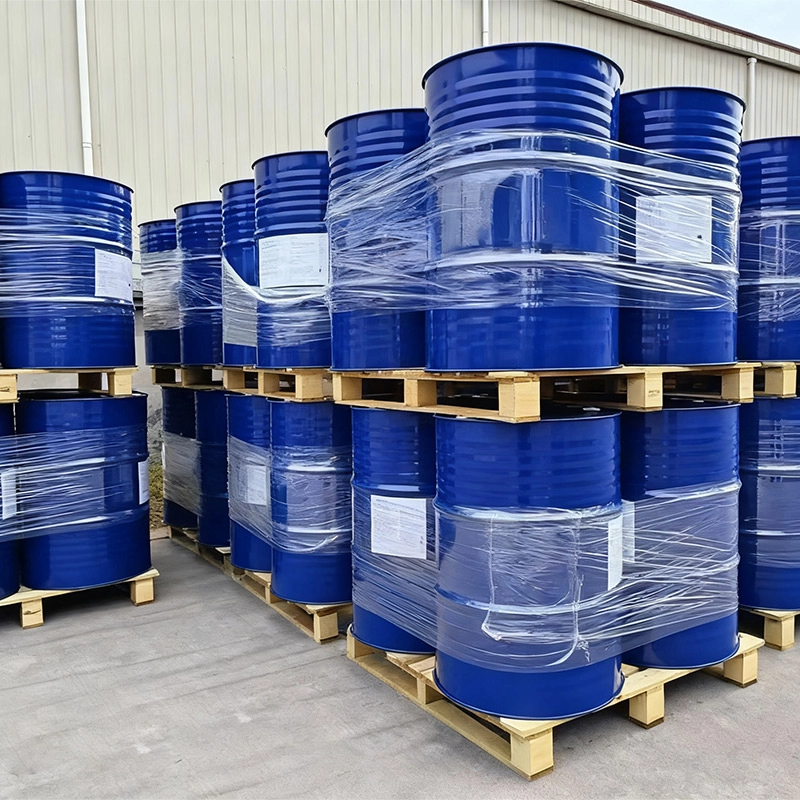
Product Description of Aniline CAS#62-53-3
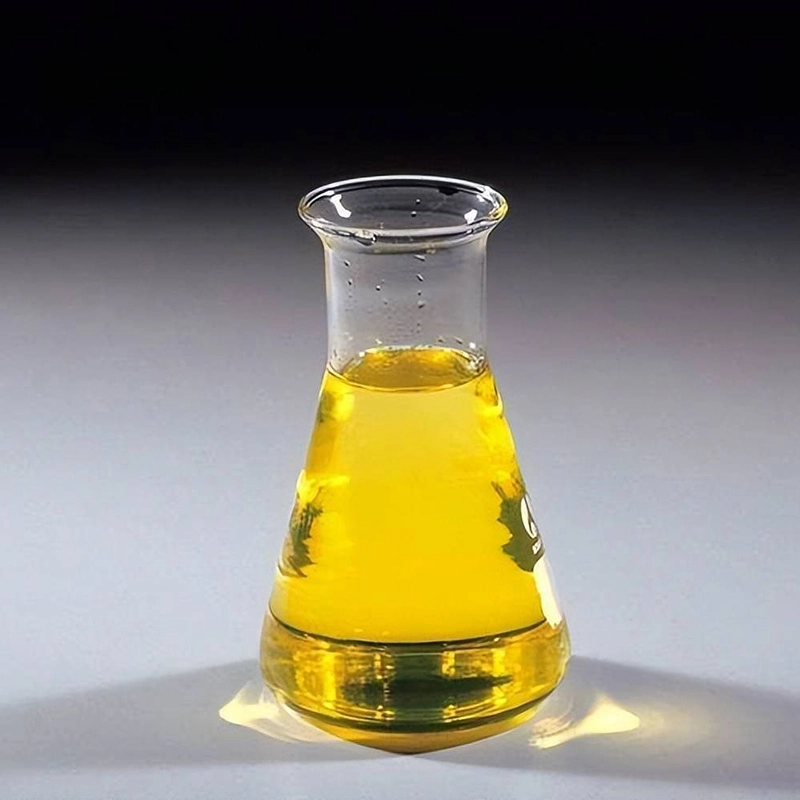
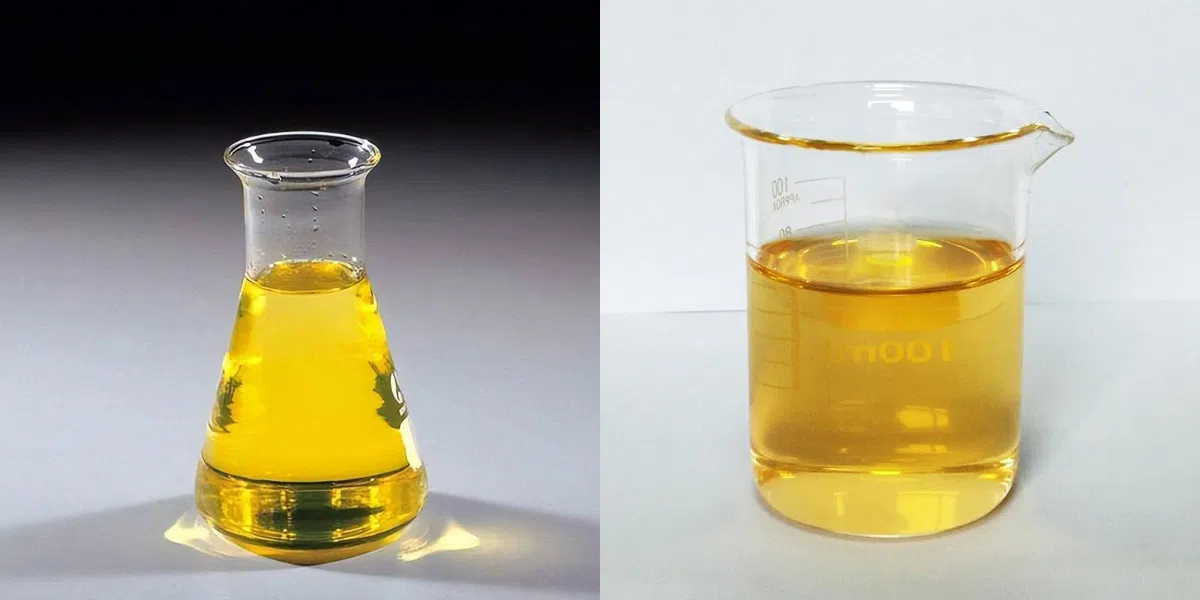
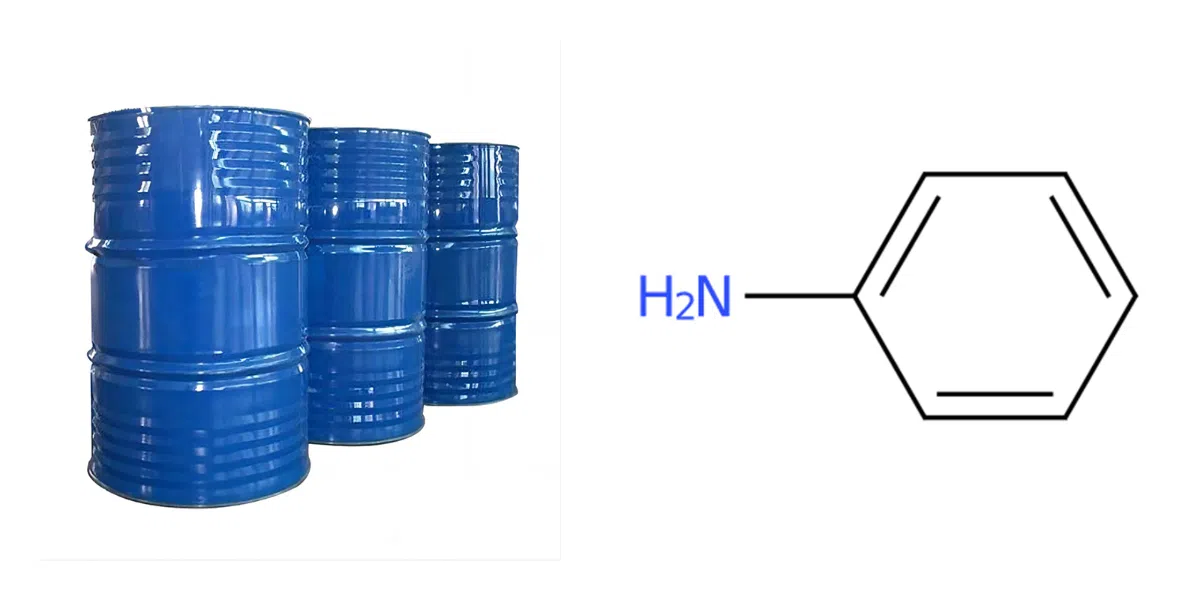
Aniline, the simplest and most prominent aromatic amine, is formed by the substitution of a hydrogen on the benzene ring with an –NH₂ group. It is a colorless, oily, and flammable liquid, notable for its strong, unpleasant odor.
At elevated temperatures up to 370°C, the compound is only marginally soluble in water but mixes freely with ethanol, ether, chloroform, and other organic solvents. It tends to darken upon exposure to air or light, developing a brownish tint over time. Purification by steam distillation is common practice; the inclusion of a small amount of zinc powder during distillation can help prevent oxidation. For additional stability, purified aniline may be preserved with 10–15 ppm NaBH₄ to suppress oxidative degradation. In water, aniline forms a solution with mild alkaline properties.
Aniline readily combines with acids to form ammonium-type salts. The amine hydrogens are susceptible to substitution by alkyl or acyl groups, affording secondary and tertiary amines or acyl anilines. Electrophilic aromatic substitution predominantly yields ortho- and para-isomers. Furthermore, reaction with nitrous acid produces diazonium salts, which are indispensable intermediates in the synthesis of a wide array of benzene derivatives and azo compounds.
Aniline Chemical Properties
| Melting point | -6 °C (lit.) |
| Boiling point | 184 °C (lit.) |
| density | 1.022 g/mL at 25 °C (lit.) |
| vapor density | 3.22 (185 °C, vs air) |
| vapor pressure | 0.7 mm Hg ( 25 °C) |
| refractive index | n20/D 1.586(lit.) |
| Fp | 76 °C |
| storage temp. | 2-8°C |
| solubility | water: soluble |
| form | Liquid |
| pka | 4.63(at 25℃) |
| color | APHA: ≤250 |
| Specific Gravity | 1.021 |
| Odor | Sweet, amine-like odor detectable at 0.6 to 10 ppm |
| Relative polarity | 0.42 |
| PH | 8.8 (36g/l, H2O, 20℃) |
| PH Range | 8.1 |
| explosive limit | 1.2-11%(V) |
| Water Solubility | 36 g/L (20 ºC) |
| Merck | 14659 |
| BRN | 605631 |
| Henry's Law Constant | 1.91 at 25 °C (thermodynamic method-GC/UV spectrophotometry, Altschuh et al., 1999) |
| Exposure limits | TLV-TWA skin 2 ppm (~8 mg/m3) (ACGIH), 5 ppm (~19 mg/m3) (MSHA, OSHA, and NIOSH); IDLH 100 ppm (NIOSH). |
| Dielectric constant | 7.8(0℃) |
| Stability: | Stable. Incompatible with oxidizing agents, bases, acids, iron and iron salts, zinc, aluminium. Light sensitive. Combustible. |
| LogP | 0.9 |
| CAS DataBase Reference | 62-53-3(CAS DataBase Reference) |
| IARC | 2A (Vol. 27, Sup 7, 127) |
| NIST Chemistry Reference | Aniline(62-53-3) |
| EPA Substance Registry System | Aniline (62-53-3) |
| Hazard Codes | T,N,F |
| Risk Statements | 23/24/25-40-41-43-48/23/24/25-50-68-48/20/21/22-39/23/24/25-11 |
| Safety Statements | 26-27-36/37/39-45-46-61-63-36/37-16 |
| RIDADR | UN 1547 6.1/PG 2 |
| OEL | TWA: None ppm |
| WGK Germany | 2 |
| RTECS | BW6650000 |
| F | 46243 |
| Autoignition Temperature | 615 °C |
| TSCA | Yes |
| HS Code | 2921 41 00 |
| HazardClass | 6.1 |
| PackingGroup | II |
| Hazardous Substances Data | 62-53-3(Hazardous Substances Data) |
| Toxicity | LD50 orally in rats: 0.44 g/kg (Jacobson) |
| IDLA | 100 ppm |
Product Usage
Aniline has long been an important commodity chemical, with a history of industrial use spanning many decades. At present, the bulk of aniline consumption is directed toward the production of polyurethanes and rubber materials. Smaller portions are used in the formulation of agricultural chemicals (such as herbicides, fungicides, insecticides, and animal repellents), defoliants, dyes, antioxidants, antidegradants, and rubber accelerators.
Furthermore, aniline is incorporated into a variety of household products, including polish formulations for stoves and footwear, paints, clear coatings, and permanent marking inks.