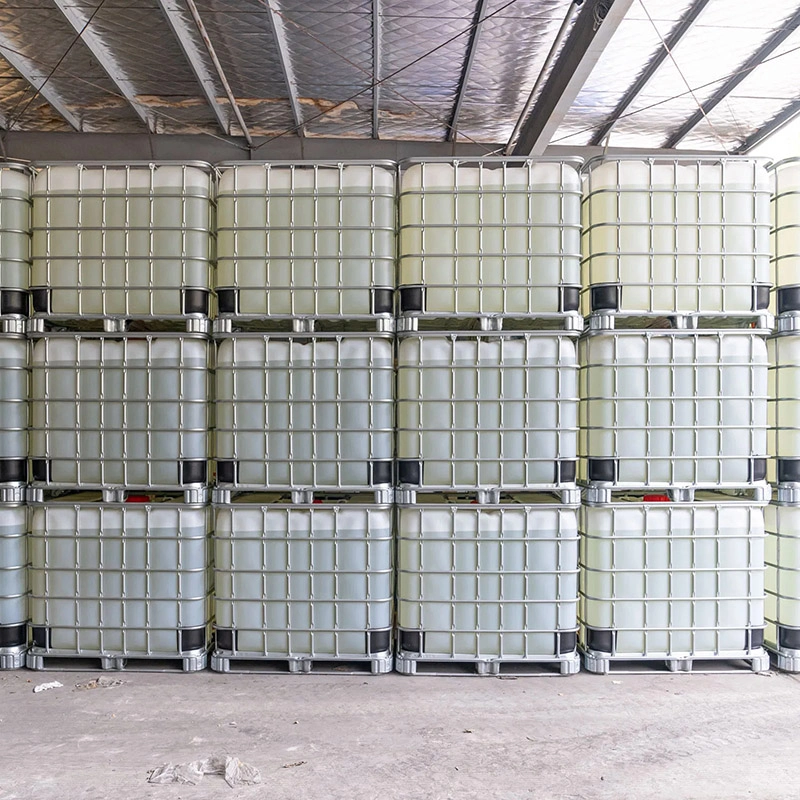
Product Description of Acrylonitrile CAS#107-13-1
Acrylonitrile is a colorless, low-viscosity liquid that is both flammable and volatile; its vapors can create explosive mixtures in the presence of ignition sources. It is not naturally occurring and is manufactured in large quantities by the chemical industry, with demand showing a consistent upward trend over recent years.
This widely produced unsaturated nitrile compound serves as a fundamental raw material for a variety of products, including plastics, synthetic rubber, and acrylic fibers. While it was historically applied as a fumigant pesticide, these applications have been fully abandoned.
In organic synthesis, acrylonitrile functions as a crucial intermediate for the preparation of pharmaceuticals, antioxidants, dyes, and other chemicals. Its largest markets are acrylic and modacrylic fiber producers, as well as manufacturers of high-impact ABS plastics.
Beyond these, acrylonitrile is employed in the production of styrene-acrylonitrile (SAN) resins used in automotive parts, household items, packaging, office machinery, luggage, and building materials. Its downstream product, adiponitrile, is additionally used in the manufacture of nylon, colorants, medicinal agents, and crop protection chemicals.
Acrylonitrile Chemical Properties
| Melting point | -83 °C (lit.) |
| Boiling point | 77 °C (lit.) |
| density | 0.806 g/mL at 20 °C |
| vapor density | 1.83 (vs air) |
| vapor pressure | 86 mm Hg ( 20 °C) |
| refractive index | n20/D 1.391(lit.) |
| Fp | 32 °F |
| storage temp. | 2-8°C |
| solubility | 73g/l |
| form | Liquid |
| color | Clear |
| PH | 6.0-7.5 (50g/l, H2O, 20℃) |
| Odor | Mild pyridine-like odor at 2 to 22 ppm |
| Odor Threshold | 8.8ppm |
| explosive limit | 2.8-28%(V) |
| Water Solubility | Soluble. 7.45 g/100 mL |
| Sensitive | Light Sensitive |
| Merck | 14131 |
| BRN | 605310 |
| Henry's Law Constant | 1.30 at 30.00 °C (headspace-GC, Hovorka et al., 2002) |
| Exposure limits | NIOSH REL: TWA 1 ppm, 15-min C 1 ppm, IDLH 85 ppm; OSHA PEL: TWA 2 ppm, 15-min C 10 ppm; ACGIH TLV: TWA 2 ppm. |
| Dielectric constant | 33.01 |
| LogP | 0.017 at 21℃ |
| CAS DataBase Reference | 107-13-1(CAS DataBase Reference) |
| IARC | 2B (Vol. 71) 1999 |
| NIST Chemistry Reference | 2-Propenenitrile(107-13-1) |
| EPA Substance Registry System | Acrylonitrile (107-13-1) |
| Hazard Codes | F,T,N,Xn |
| Risk Statements | 45-11-23/24/25-37/38-41-43-51/53-39/23/24/25-62-63 |
| Safety Statements | 53-9-16-45-61-36/37 |
| RIDADR | UN 1093 3/PG 1 |
| OEB | D |
| OEL | TWA: 1 ppm, Ceiling: 10 ppm [15-minute] [skin] |
| WGK Germany | 3 |
| RTECS | AT5250000 |
| F | 8 |
| Autoignition Temperature | 481 °C |
| TSCA | Yes |
| HazardClass | 3 |
| PackingGroup | I |
| HS Code | 29261000 |
| Hazardous Substances Data | 107-13-1(Hazardous Substances Data) |
| Toxicity | LD50 orally in rats: 0.093 g/kg (Smyth, Carpenter) |
| IDLA | 60 ppm |
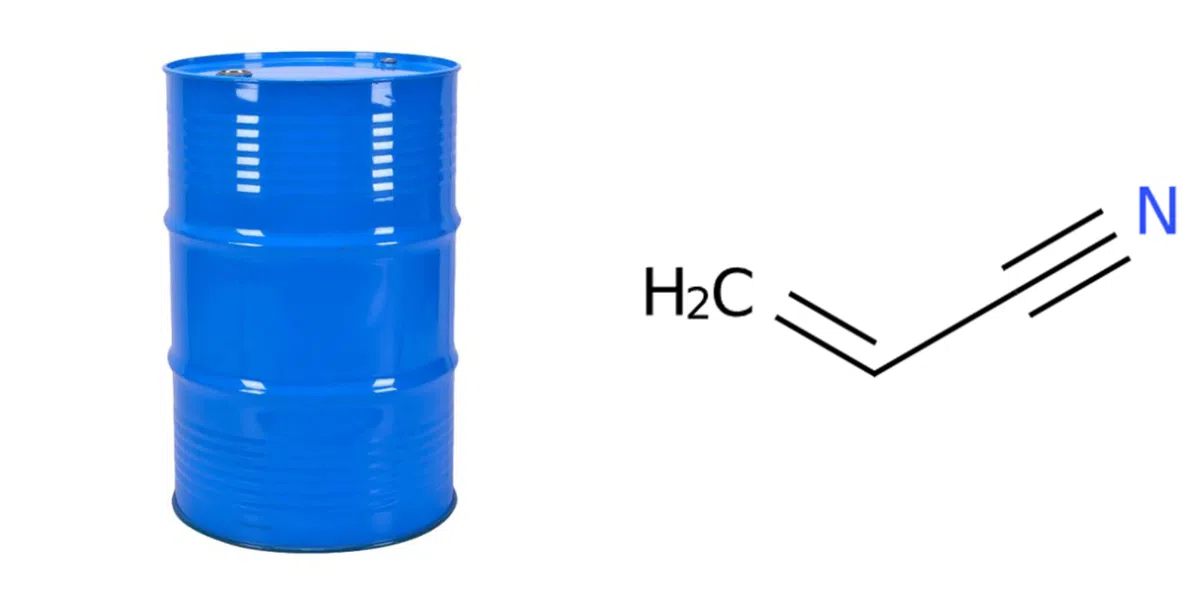
Product Usage
Acrylonitrile finds its principal application in the production of acrylic and modacrylic textile fibers. It is also a vital raw material for the production of ABS and SAN resins, along with adiponitrile, acrylamide, nitrile rubber, and gas-barrier resins. Although it was once used in pesticide formulations in combination with carbon tetrachloride, all pesticidal uses have now been abandoned.
This industrial chemical has been of major commercial importance since the 1940s, with its adoption accelerating alongside the growth of the petrochemical industry.
ABS and SAN resin production represent the second-largest consumption segment for acrylonitrile. ABS materials are produced by grafting styrene and acrylonitrile onto polybutadiene or styrene–butadiene copolymer substrates, generally incorporating about 25 wt% acrylonitrile. These resins are widely utilized in automotive parts, recreational vehicle components, pipe and fitting systems, and domestic appliances.
SAN copolymers, containing 25–30 wt% acrylonitrile, are noted for their outstanding transparency and optical clarity, making them particularly suitable for automotive instrument panels, gauge lenses, and numerous household items.