Product Details
Within the plasticizer manufacturing sector, 2-Ethylhexanol is widely known by the common industry name "octanol", and it stands as one of the most high-value foundational chemical feedstocks in the global fine chemical supply chain. Beyond its dominant role in plasticizer synthesis, this compound also acts as a critical raw material for octyl acrylate production and a core building block for industrial surfactant manufacturing.
Its full spectrum of end-use applications covers a complete set of high-demand chemical products: dioctyl phthalate (DOP), dioctyl adipate (DOA), trioctyl trimellitate (TOTM) and other phthalate/ aliphatic plasticizers, octyl acrylate monomers, various industrial surfactants, lubricant additives for bone oil processing, mining processing reagents, diesel performance boosters, general industrial solvents and custom formulation components, metal corrosion inhibitors, and a wide range of downstream specialty chemical derivatives.
As a standalone functional agent, 2-Ethylhexanol delivers reliable performance as a high-efficiency industrial solvent, process antifoaming agent, uniform dispersant and processing lubricant. Its highest-volume downstream derivatives are concentrated in the plasticizer and acrylate segments, with dioctyl phthalate — produced from this feedstock — remaining the most widely used general-purpose plasticizer for flexible PVC production. Roughly 95% of all DOP output globally is ultimately consumed in various PVC manufacturing scenarios.
Chemical Properties
| Melting point | −76 °C(lit.) |
| Boiling point | 183-186 °C(lit.) |
| density | 0.833 g/mL at 25 °C(lit.) |
| vapor density | 4.49 (vs air) |
| vapor pressure | 0.2 mm Hg ( 20 °C) |
| refractive index | n20/D 1.431(lit.) |
| FEMA | 3151 | 2-ETHYL-1-HEXANOL |
| Fp | 171 °F |
| storage temp. | Store below +30°C. |
| solubility | Water |
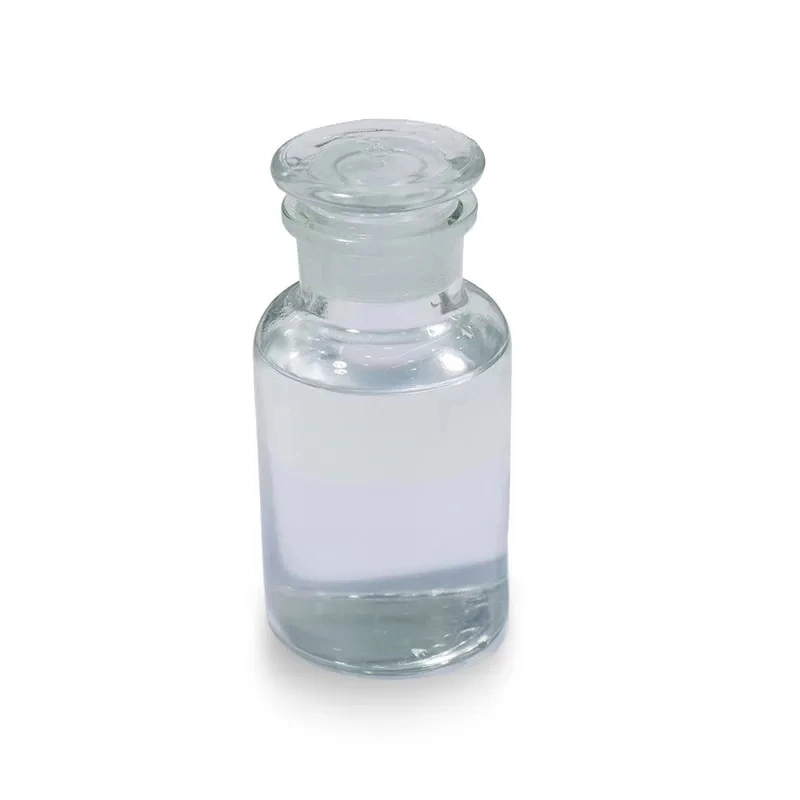
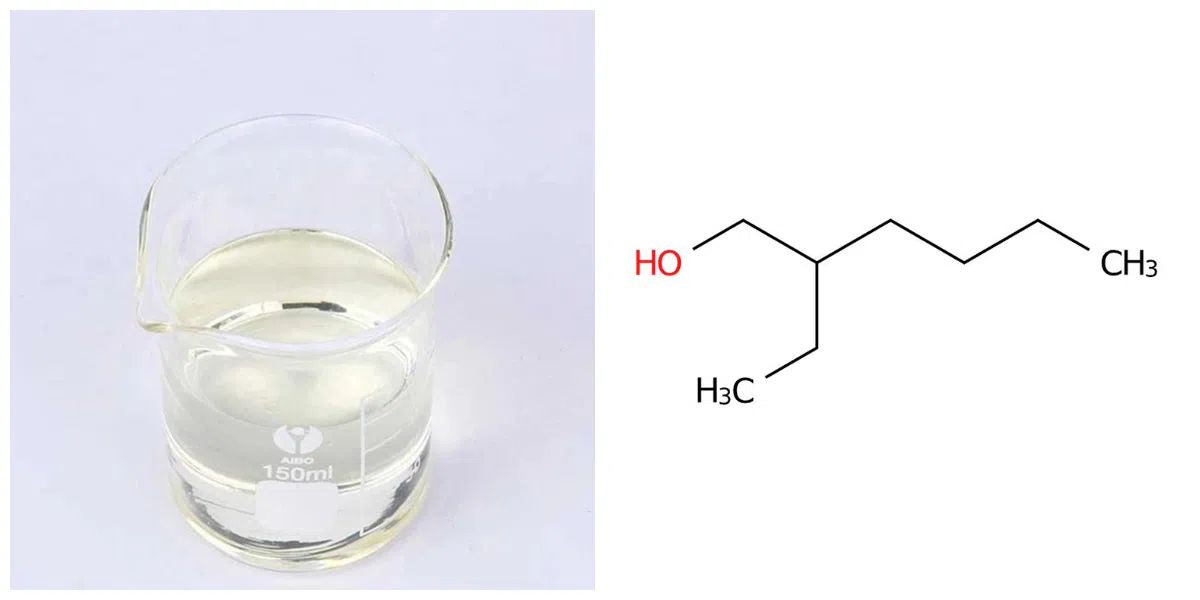
| form | Liquid |
| pka | 15.05±0.10(Predicted) |
| color | Clear |
| PH | 7 (1g/l, H2O, 20℃) |
| Odor | sweet. |
| biological source | synthetic |
| Odor Threshold | 0.013ppm |
| Odor Type | citrus |
| explosive limit | 0.88%, 104°F |
| Water Solubility | 1 g/L (20 ºC) |
| JECFA Number | 267 |
| Merck | 14,3808 |
| BRN | 1719280 |
| Dielectric constant | 3.4(18℃) |
| Stability: | Stable. Combustible. Incompatible with strong oxidizing agents, strong acids. |
| InChIKey | YIWUKEYIRIRTPP-UHFFFAOYSA-N |
| LogP | 2.9 at 25℃ |
| CAS DataBase Reference | 104-76-7(CAS DataBase Reference) |
| NIST Chemistry Reference | 1-Hexanol, 2-ethyl-(104-76-7) |
| EPA Substance Registry System | 2-Ethylhexanol (104-76-7) |
Safety Information
| Hazard Codes | Xn,Xi |
| Risk Statements | 37/38-41-36-21-52/53-36/37/38-20 |
| Safety Statements | 26-36/39-36/37/39-36-61 |
| WGK Germany | 2 |
| RTECS | MP0350000 |
| Autoignition Temperature | 550 °F |
| TSCA | Yes |
| HS Code | 29051610 |
| HS Code | 29339990 |
| Hazardous Substances Data | 104-76-7(Hazardous Substances Data) |
| Toxicity | LD50 orally in Rabbit: 3730 mg/kg LD50 dermal Rat > 3000 mg/kg |
Key Applications
Primary feedstock for DOP, DOA, TOTM and other mainstream PVC plasticizers
Core raw material for octyl acrylate, industrial surfactants and corrosion inhibitors
High-performance functional agent: works as solvent, antifoamer, dispersant and processing lubricant
Widely used in mining flotation reagents, diesel fuel additives and fine chemical synthesis