Product Details
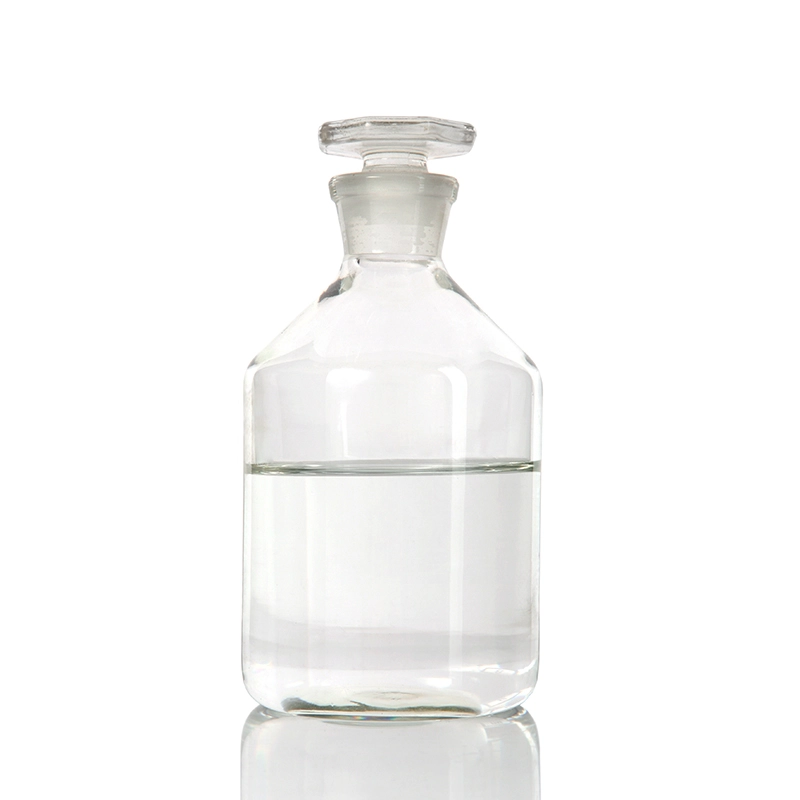
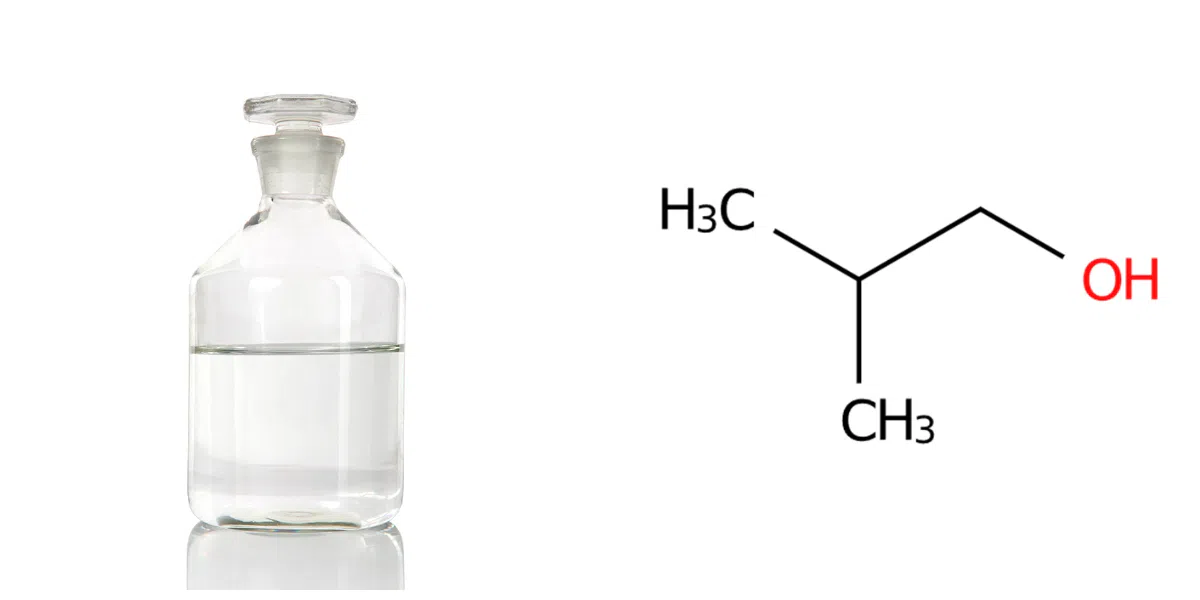
Isobutanol, alternatively referred to as 2-methylpropanol (note: it is not isopropyl alcohol, a common name correction to avoid confusion), is a colourless, highly flammable liquid. As a naturally occurring key aroma compound, it exists in fresh tea leaves, black tea and green tea, and plays a critical role in forming their distinct, characteristic fragrance.
This compound has a molecular weight of 74.12, with a well-documented set of stable physical properties: boiling point at 107.66 °C, relative density of 0.8016, refractive index of 1.3959, and flash point of 37 °C. It is fully miscible with alcohol and ether, while only exhibiting limited, slight solubility in water. When mixed with ambient air, it can form explosive vapor mixtures, with a defined flammable explosion limit of 2.4% by volume. It also readily forms stable addition complexes with specific reagents such as calcium chloride, with the typical adduct structure CaCl₂·3C₄H₁₀O.
Chemical Properties
| Melting point | 108 °C (lit.) |
| Boiling point | 108 °C (lit.) 108 °C |
| Density | 0.803 g/mL at 25 °C (lit.) |
| Vapor density | 2.55 (vs air) |
| Vapor pressure | 8 mm Hg ( 20 °C) |
| Refractive index | n20/D 1.396(lit.) |
| FEMA | 2179 | ISOBUTYL ALCOHOL |
| Fp | 82 °F |
| Storage temp | Store at +5°C to +30°C. |
| Solubility | water: miscible70g/L at 20°C; miscible with alcohol and oils. |
| Form | Solid |
| Pka | >14 (Schwarzenbach et al., 1993) |
| Color | APHA: ≤10 |
| Relative polarity | 0.552 |
| PH | 7 (80g/l, H2O, 20℃) |
| Odor | Slightly suffocating; nonresidual alcoholi |
| Odor Threshold | 0.011ppm |
| Explosive limit | 1.5-12%(V) |
| Odor Type | ethereal |
| Water Solubility | 95 g/L (20 ºC) |
| λmax | λ: 260 nm Amax: 0.10 λ: 280 nm Amax: 0.06 |
| JECFA Number | 251 |
| Merck | 14,5131 |
| BRN | 1730878 |
| Henry's Law Constant | 20.0 at 30.00 °C, 72.2 at 50.00 °C, 133 at 60.00 °C, 216 at 70.00 °C, 330 at 80.00 °C (headspace- GC, Hovorka et al., 2002) |
| Exposure limits | TWA 300 mg/m3 (100 ppm) NIOSH, 150 mg/m3 (50 ppm) (ACGIH); IDLH 8000 ppm. |
| Dielectric constant | 31.7(-80℃) |
| Stability | Stable. Flammable. Incompatible with strong oxidizing agents, aluminium. |
| InChIKey | ZXEKIIBDNHEJCQ-UHFFFAOYSA-N |
| LogP | 1 at 25℃ |
| CAS DataBase Reference | 78-83-1(CAS DataBase Reference) |
| NIST Chemistry Reference | 1-Propanol, 2-methyl-(78-83-1) |
| EPA Substance Registry System | Isobutanol (78-83-1) |
Safety Information
| Hazard Codes | Xi |
| Risk Statements | 10-37/38-41-67 |
| Safety Statements | 13-26-37/39-46-7/9 |
| RIDADR | UN 1212 3/PG 3 |
| OEB | A |
| OEL | TWA: 50 ppm (150 mg/m3) |
| WGK Germany | 1 |
| RTECS | NP9625000 |
| Autoignition Temperature | 801 °F |
| TSCA | Yes |
| HazardClass | 3 |
| PackingGroup | III |
| HS Code | 29051990 |
| Hazardous Substances Data | 78-83-1(Hazardous Substances Data) |
| Toxicity | LD50 orally in rats: 2.46 g/kg (Smyth) |
| IDLA | 1,600 ppm |
Product Application
Functions as a dedicated analytical reagent, chromatographic analysis standard, industrial solvent and efficient extraction agent for laboratory and production workflows.
Acts as a foundational feedstock for organic synthesis, while delivering outstanding solvency performance across multiple industrial formulation systems.
As a core organic synthesis raw material, it is mainly deployed for the production of isobutyronitrile — a critical intermediate for diazinon pesticide manufacturing.
As a versatile organic synthesis feedstock, it supports the production of petroleum additives, high-efficiency antioxidants, 2,6-di-tert-butyl-4-methylphenol, isobutyl acetate (a widely used paint solvent), plasticizers, synthetic rubber, synthetic musk, fruit flavor essences and pharmaceutical intermediates. It also enables the purification of strontium, barium, lithium salts and other high-purity chemical reagents, and serves as a premium-grade industrial solvent.
Approved as a legal food flavoring agent under China’s GB 2760-96 standard, and widely used as a safe extraction solvent in food processing scenarios.