Product Details
PPS possesses good thermal and chemical stability, along with outstanding mechanical strength. However, its low molecular weight makes it prone to undergoing disproportionation and cross-linking reactions.
Acting as a starting material for brightener production, PPS is a highly effective brightener (secondary brightener) and leveling agent. Its high purity ensures no harmful impurities or salts are introduced into the plating solution, contributing to a long operational life and preventing stretching problems. It is typically used in conjunction with saccharin, one or more acetylene compounds, and wetting agents. This combination produces a nickel deposit that is particularly bright, smooth, and ductile. The method is also suitable for use with stationary (non-flowing) electrolytes.
Chemical Properties
| English Name | 3-(1-Pyridinio)-1-propanesulfonate |
| English Synonyms | NDSB-201;PPS;PYRIDINIUM N-PROPYL SULFOBETAINE;3-(1-PYRIDINIO)-1-PROPANESULFONATE;3-(1-PYRI DINIO)-1-PROPANESULFONATE INNER SALT;3-(1-PYRIDINIO)PROPANESULFONATE;3-(1-PYRIDINO)-1-PRO PANE SULFONATE;1-(3-SULFOPROPYL)PYRIDINIUM BETAIN |
| CAS Number | 15471-17-7 |
| Molecular Formula | C8H11NO3S |
| Molecular Weight | 201.24 |
| EINECS Number | 239-491-3 |
| Melting point | 275-277°C |
| Density | 1.53[at 20°C] |
| Vapor pressure | OPa at 25℃ |
| Flash point | 160 °C |
| Storage conditions | Sealed in dry,Room Temperature |
| Solubility | Methanol (slightly soluble), water (slightly soluble) |
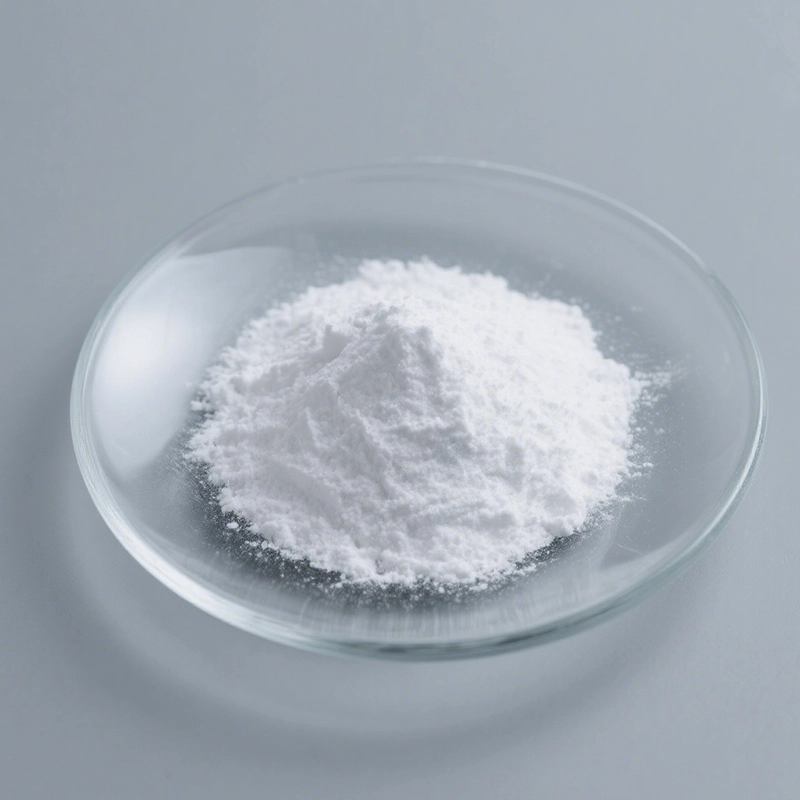
| Form | White powder |
| Color | White |
| Water solubility | 240.5g/L at 25℃ |
| BRN | 1621867 |
| InChI | InChl=1S/C8H11NO3S/c10-13(11,12)8-4-7-9-5-2-1-3-6-9/h1-3,5-6H,4,7-8H2 |
| InChIKey | REEBJQTUUTGAL-UHFFFAOYSA-N |
| SMILES | C1C=CC=C[N+]=1CCCS([O-])(=O)=0 |
| LogP | -2.78 at 21.5℃ |
Product Application
PPS (CAS# 15471-17-7, 3-(1-Pyridinio)-1-propanesulfonate, also named Pyridinium propyl sulphobetain) is a high-purity electroplating intermediate and functional zwitterionic compound, with its core product applications as follows:
1. Nickel Electroplating Industry (Primary Application)
Acts as a high-efficiency secondary brightener and strong leveling agent in Watts bright nickel plating baths, with typical working dosage of 10~50 mg/L and consumption of 10 g/KAH .
Delivers extremely bright, fully leveled and highly ductile nickel deposits, and shows outstanding leveling performance especially in the high current density region .
Its high purity avoids introducing harmful by-products or foreign salts into the plating bath, extending the service life of the bath without causing ductility defects of the coating .
Usually compounded with saccharin, acetylenic compounds and wetting agents to achieve optimal plating effect, and is widely used in electroplating scenarios of automotive parts and semiconductor components .
2. Other Industrial & Scientific Applications
Biomedical field: Serves as a mild zwitterionic surfactant for membrane protein extraction, which can effectively maintain the natural conformation of proteins; it also acts as a carrier material in drug delivery systems to improve the bioavailability of hydrophobic drugs .
Material & analytical chemistry: Used as an ionic liquid precursor for green catalytic reactions, and applied to the modification of conductive polymer materials; it can also optimize the separation selectivity of chromatographic columns and the performance of electrophoresis buffer systems in analytical testing .
Other scenarios: Applied in the preparation of conductive materials, daily chemical formulations and other fine chemical fields .