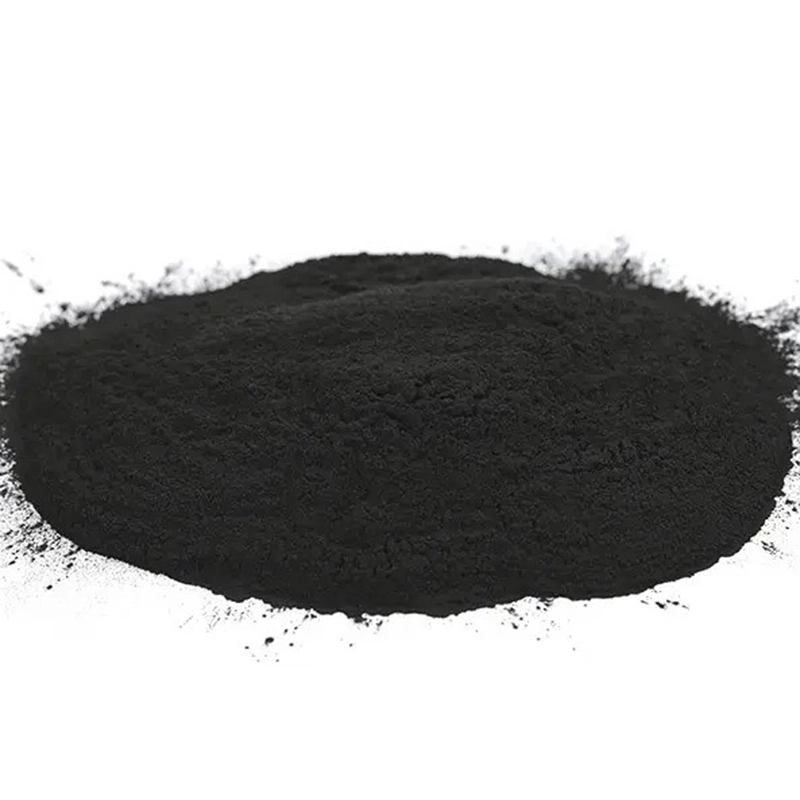
Product Description of Palladium CAS#7440-05-3
Palladium is a transition metal from the nickel group (Group III) and is considered a light platinum-group metal. It's a silvery-white metal that's moderately hard, forgeable, and very ductile. In Group 10 of the periodic table, it falls right between periods 4, 5, and 6.
Its properties are similar to both nickel (above it) and platinum (below it), and it behaves a lot like platinum in both chemistry and physics. Palladium is soft, silvery-white, and easy to work with—you can roll it into thin sheets or draw it into super fine wires.
As for chemical reactions, it dissolves in aqua regia, hot nitric acid, and sulfuric acid. It's only slightly soluble in hydrochloric acid and doesn't dissolve in water at all—whether hot or cold.
Palladium Chemical Properties
| Melting point | 1554 °C(lit.) |
| Boiling point | 2970 °C(lit.) |
| Density | 1.025 g/mL at 25 °C |
| Storage temp. | No restrictions. |
| Solubility | Soluble in aqua regia |
| Form | Wire |
| Color | Silver-gray |
| Specific Gravity | 12.03 |
| Odor | Odorless |
| Resistivity | 9.96 μΩ-cm, 20°C |
| Water Solubility | INSOLUBLE |
| Merck | 146,989 |
| Exposure limits | ACGIH: TWA 1 mg/m3 |
| OSHA: TWA 15 mg/m3; TWA 5 mg/m3 | |
| Stability | Stable. Flammable - fine powder may cause fire or explosion in air. Incompatible with ozone, sodium tetrahydroborate, sulphur, arsenic. |
| InChIKey | KDLHZDBZIXYQEI-UHFFFAOYSA-N |
| CAS DataBase Reference | 7440-05-3(CAS DataBase Reference) |
| NIST Chemistry Reference | Palladium(7440-05-3) |
| EPA Substance Registry System | Palladium (7440-05-3) |
Safety Information
| Hazard Codes | T,F,Xi |
| Risk Statements | 61-33-37/38-40-41-36/37/38-11 |
| Safety Statements | 53-26-36/37/39-24/25-36-22 |
| RIDADR | UN 3089 4.1/PG 2 |
| WGK Germany | - |
| RTECS | RT3480500 |
| Autoignition Temperature | >1120 °F |
| TSCA | Yes |
| HazardClass | 4.1 |
| PackingGroup | III |
| HS Code | 28439000 |
| Hazardous Substances Data | 7440-05-3(Hazardous Substances Data) |
| Toxicity | LD50 oral (rat) 200 mg/kg (palladium chloride) |
| LC50 intratracheal (rat) 6 mg/kg (palladium chloride) |
Product Application of Palladium CAS#7440-05-3
As a transition metal, it's a great catalyst, especially for hydrogenation reactions (like those using the Lindlar catalyst). One of its biggest jobs is in catalytic hydrogenation, dehydrogenation, and petroleum cracking—all key steps in organic synthesis and oil refining.
Palladium and platinum are both used in catalytic converters in cars to cut down on unburned fuel emissions. It's also used to make surgical tools, electrical contacts, clock springs, spark plugs, and specialty wires. In jewelry, it's often used as "white gold."
Palladium–gold alloys are big in dentistry and medicine—they're used to replace damaged bones and joints and as supports for porcelain bridges. These alloys also show up in jewelry and decorative items like gemstone settings, watch cases, and brooches as a cheaper alternative to gold. Palladium also has a cool trick—it can absorb huge amounts of hydrogen, which makes it a great catalyst in chemical reactions and catalytic converters. And since it can absorb carbon, it's also used in carbon monoxide monitors.