Polyurethane Description
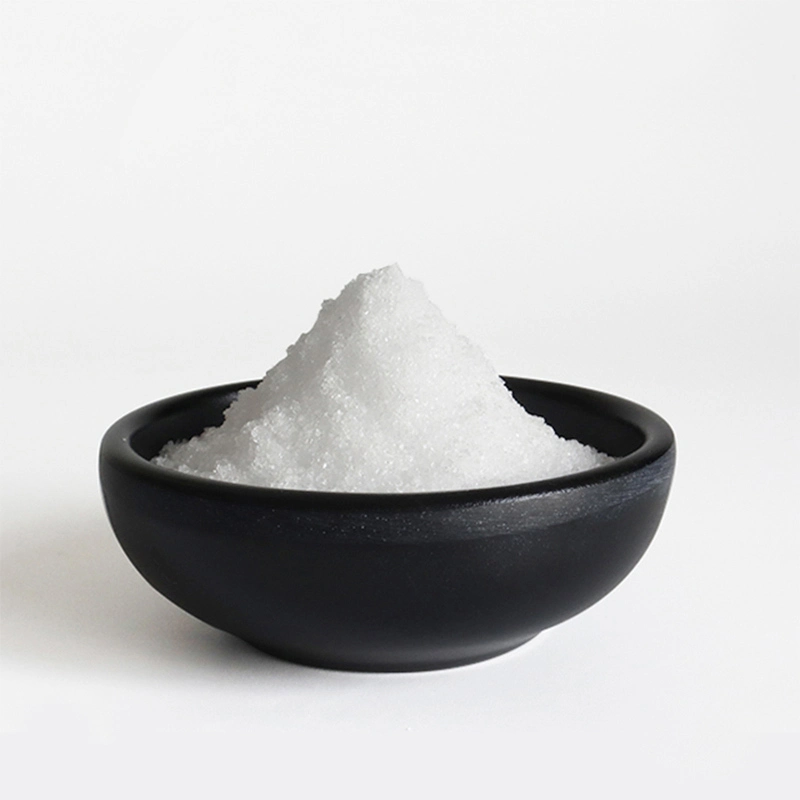
Polyurethane (often abbreviated as PU, with the full chemical name polycarbamate) is a highly versatile class of organic polymers defined by repeating urethane linkages (–NHCOO–) along its main molecular chain . It was first successfully synthesized in 1937 by German chemist Prof. Otto Bayer via a standard polyaddition reaction between diisocyanates and hydroxyl-containing difunctional compounds (such as glycols, polyether or polyester polyols), marking the official birth of this material family .
Unlike conventional single-monomer polymers, polyurethane has no independent "urethane monomer" — its final properties, morphology and application scenarios can be precisely tuned across an extremely wide range by adjusting the types, ratios and molecular weights of raw materials, making it one of the most adaptable engineering plastics in the global industrial system, with an annual global production volume exceeding 21.2 million tons as of 2020 .
Product Application
Polyurethane is used in all kinds of adhesives—water-based, solvent-based, and hot melt. It can be made as a thermoplastic or reactive material, and you can get it in single-component or two-component versions. What makes polyurethanes so versatile is the chemistry of the urethane group itself. These materials are typically made by reacting isocyanates with alcohols, or by polymerizing polyisocyanates with hydroxyl-containing compounds—like polyesters and polyethers.
The most important polyurethane products today include foam plastics, adhesives, coatings, and elastomers.
1.Polyurethane Foam Plastics.
These are mainly produced from diisocyanates and polyether- or polyester-type polyols, combined with catalysts, blowing agents, foam stabilizers, and other additives to produce either soft or rigid foams. Three foaming methods are available: the prepolymerization process, the semi-prepolymerization process, and the one-step process. The semi-prepolymerization and prepolymerization methods are better suited for small-batch production, while the one-step process is more economical for large-scale manufacturing. Rigid and soft polyether- or polyester-based polyurethane foams are thermosetting plastics, and their final properties depend heavily on the choice of raw materials and formulation. They offer oil resistance, cold resistance, thermal insulation, and sound absorption, making them suitable for thermal insulation materials, insulating materials, soundproof structural components, leak-proof materials, shockproof packaging, sound-absorbing materials, padding, and dust removal and filtration media.
2.Polyurethane Adhesives.
These are two-component systems made up of polyisocyanates and hydroxyl-containing polyester compounds, which are mixed directly at the time of use. This adhesive provides strong adhesion to a wide variety of substrates, and the cured product is resistant to water, mineral oils, and atmospheric exposure. It is used for bonding metal, glass, plastic, and ceramic components in construction, machinery, and aerospace applications.
3.Polyurethane Coatings.
By combining different types of isocyanates with various polyesters, polyethers, and polyols, a wide range of polyurethane coatings can be formulated. These are mainly divided into two categories: two-component and one-component. Two-component polyurethane coatings are polyether-based, where polyisocyanates and polyethers are mixed directly. One-component polyurethane coatings are unsaturated polyester-based, and include blocked, oil-modified, and moisture-curing types. Application methods include dipping, spraying, and electrodeposition. The resulting coatings offer good insulation, strong adhesion, wear resistance, oil resistance, water resistance, and resistance to inorganic acid vapors. They are used on concrete building structures, chemical instrumentation, aircraft components, furniture, and more.
4.Polyurethane Elastomers.
Depending on the formulation, polyurethane can exhibit elasticity within a certain temperature range, and this class of materials is known as polyurethane elastomers. Germany's Bayer AG was the first company in the world to synthesize polyurethane elastomers. They fall into three main types: castable, compounded, and thermoplastic elastomers. These materials combine the elasticity of rubber with the processability of plastics, which is why they are also referred to as plastic elastomers. They possess excellent oil resistance, wear resistance, low-temperature elasticity, and aging resistance, and are used in automotive bearings, high-speed transmission belts for the textile industry, and electrical cables for oil field and geological exploration applications.