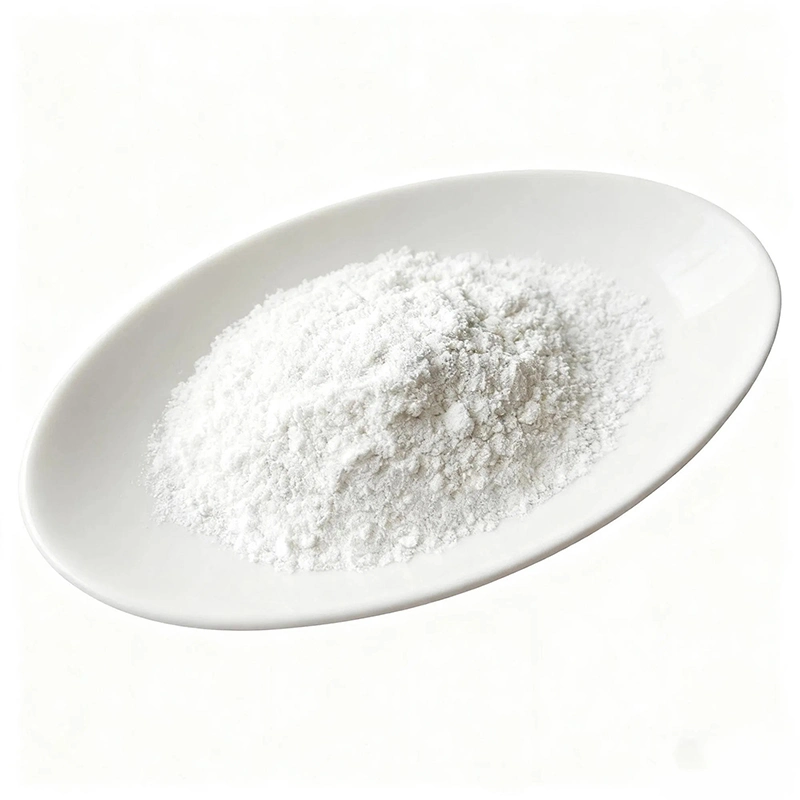
Products Description of Potassium Phosphate CAS#778-53-2
This compound is available in multiple forms, namely monobasic, dibasic, and tribasic (K₃PO₄). For most neutral-pH applications, potassium phosphate buffer systems are formulated by blending monobasic and dibasic species in varying ratios, depending on the target pH.
The Gomori buffer—one of the most widely adopted phosphate buffer systems—consists of a mixture of monobasic dihydrogen phosphate and dibasic monohydrogen phosphate. By altering the proportions of these two components, buffer solutions exhibiting reliable buffering action can be produced across a pH spectrum of 5.8 to 8.0. With its superior buffering performance and high solubility in water, potassium phosphate proves suitable for a broad array of biochemical and laboratory uses.
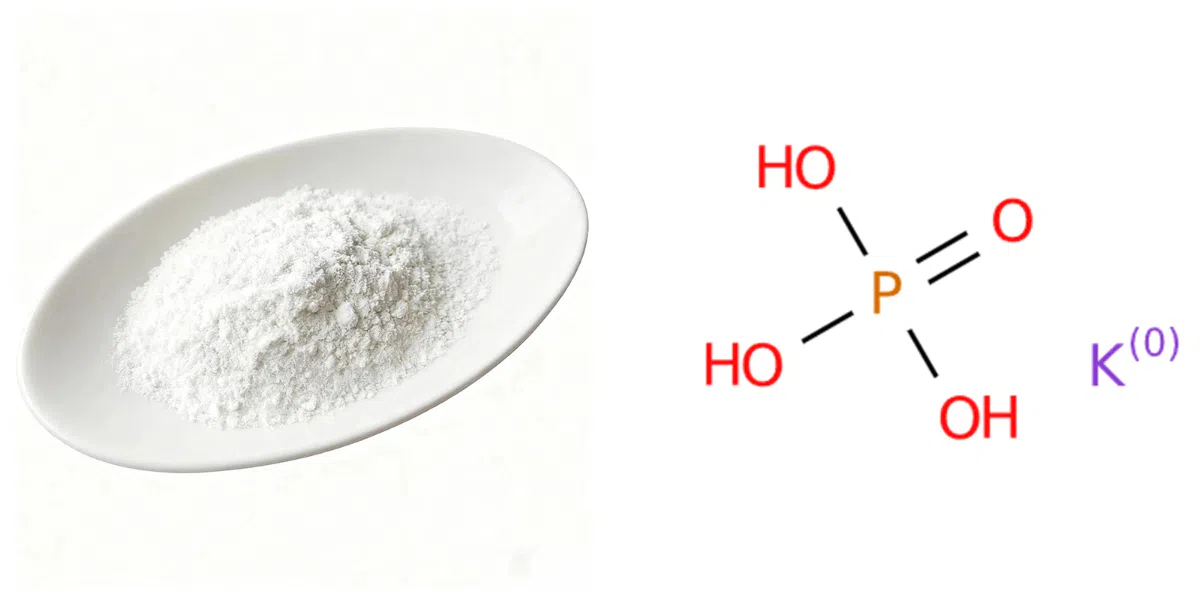
Potassium phosphate tribasic Chemical Properties
| Melting point | 1340 °C |
| density | 2.564 g/mL at 25 °C(lit.) |
| vapor pressure | 0Pa at 20℃ |
| storage temp. | room temp |
| solubility | water: soluble100mg/mL, clear, colorless |
| form | Solid |
| Specific Gravity | 2.564 |
| color | White |
| Odor | at 100.00?%. odorless |
| Water Solubility | 50.8 g/100 mL (25 ºC) |
| Sensitive | Hygroscopic |
| Merck | 147660 |
| BCS Class | 1 |
| Stability: | Stable. Incompatible with strong oxidizing agents, moisture. |
| CAS DataBase Reference | 7778-53-2(CAS DataBase Reference) |
| EPA Substance Registry System | Tripotassium phosphate (7778-53-2) |
| Hazard Codes | C,Xi |
| Risk Statements | 38-41-34 |
| Safety Statements | 26-39-45-36/37/39 |
| RIDADR | UN 1805 8/PG 3 |
| WGK Germany | 2 |
| RTECS | TC8450000 |
| F | 46244 |
| TSCA | Yes |
| HS Code | 28352400 |
Product Application
Potassium phosphate finds broad application as a fertilizer and as a food additive. It is also utilized in optical modulators and nonlinear optical technologies, including second-harmonic generation (SHG). In organic synthesis, it facilitates the phase-transfer-catalyzed conversion of vicinal dibromo compounds into acetylenes via double dehydrobromination, and it can serve as an effective reagent for the oxidative coupling of thiols to yield disulfides.
Tribasic potassium phosphate is a buffering agent with outstanding capacity, widely employed in molecular biology, biochemistry, and chromatography. It is used in the extraction of keratohyalin proteins from bovine tissues, as well as in studies examining the impact of freeze-thaw cycles on the stability of conformationally sensitive proteins. In the food sector, it functions as an additive with emulsifying, foaming, and whipping capabilities.
Additional research applications of tribasic potassium phosphate include:
Use as a component of lysis buffers for protein extraction from Gram-positive bacteria.
Employment in the scalable synthesis and post-synthetic functionalization of NU-1000 mesoporous metal-organic frameworks.
Application in the preparation of highly purified plasma membranes derived from Lilium davidii or Oryza sativa.