Calcium Propionate CAS#4075-81-4
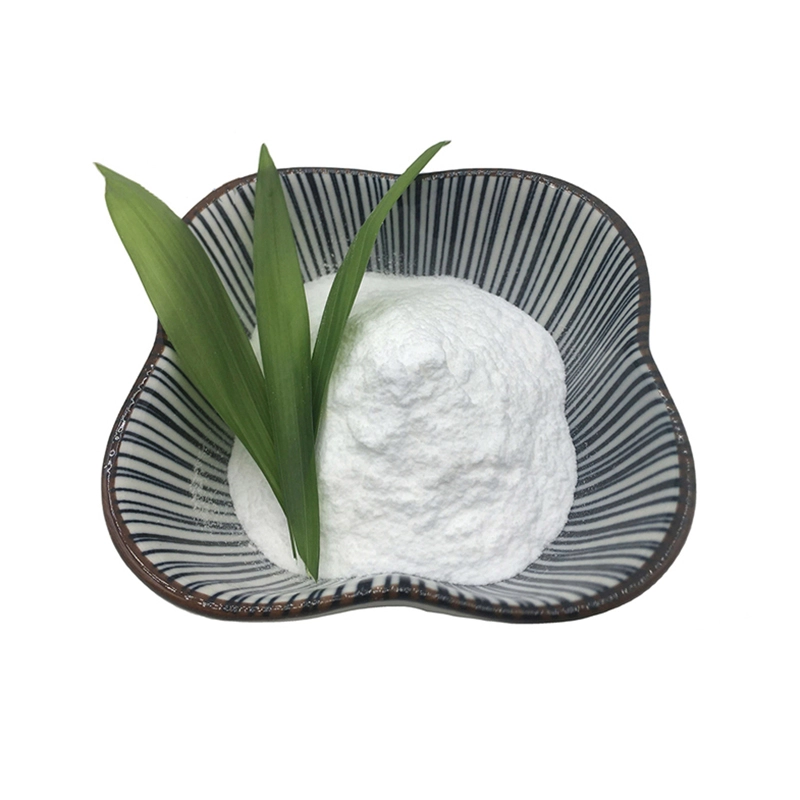
Calcium propionate (also referred to as calcium propanoate) is a white crystalline powder with a faint odor. It is stable under ambient conditions, hygroscopic, and should not be brought into contact with strong oxidizing agents. The compound has a melting point of approximately 300°C and a pH range of 7–9. It exhibits high solubility in water but only limited solubility in alcohol.
As the calcium salt of propionic acid, calcium propionate is widely utilized as a food antifungal agent. It presents as white crystals or powder, is either odorless or carries a slight propionic acid smell, and remains stable when exposed to light and heat. It dissolves in water to form an alkaline solution, is sparingly soluble in methanol and ethanol, and is insoluble in benzene and acetone. The product is deliquescent in humid air, loses its water of crystallization at around 120°C, undergoes a phase transition between 200–210°C, and decomposes into calcium carbonate at 330–340°C.
In acidic environments, calcium propionate releases free propionic acid, which exhibits antimicrobial activity against Aspergillus niger and certain bacteria. As a normal intermediate in animal metabolism, it is regarded as safe for use in feed applications. It offers broad-spectrum protection against molds and yeasts, helping to curb microbial growth and prevent feed deterioration. It is extensively employed as a preservative in bread and baked goods, as a fungicide in food and feed products, and as a feed additive to extend product shelf life. When combined with other inorganic compounds, it may also help stimulate livestock appetite and boost milk yield in dairy cows, at a recommended inclusion level of less than 0.3% of the total feed (calculated as propionic acid).
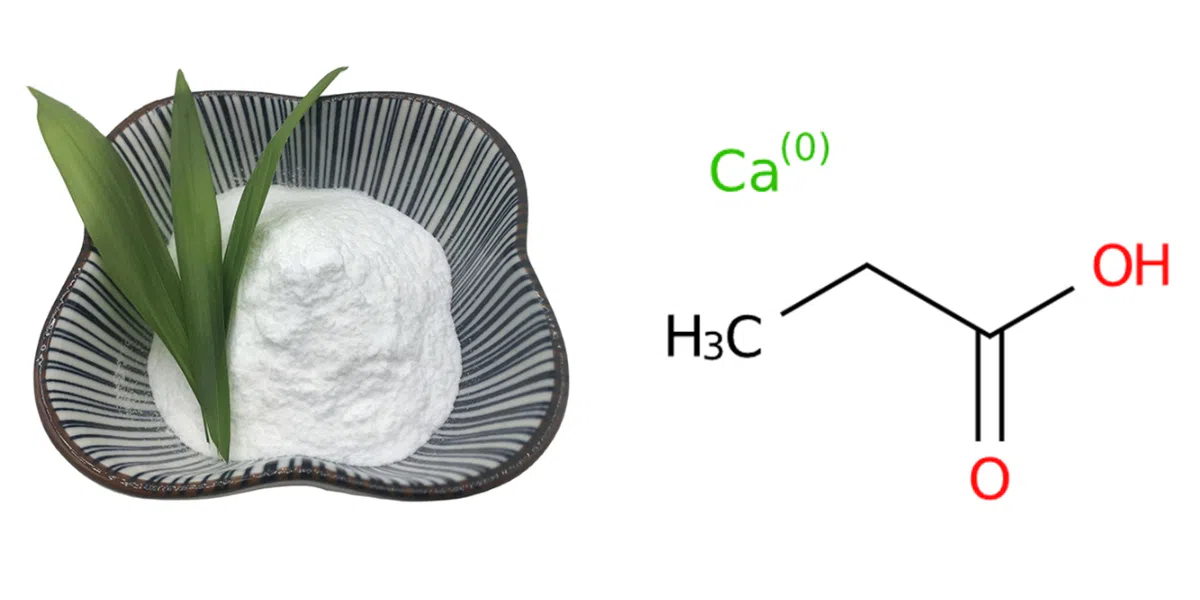
Calcium Propionate Chemical Properties
| Melting point | 300 °C |
| density | 1.41[at 20℃] |
| vapor pressure | 0-399Pa at 20-23℃ |
| storage temp. | Store below +30°C. |
| solubility | water: soluble1g/10 mL, clear, colorless |
| form | Crystals or Crystalline Powder |
| color | White |
| PH | 9.2 (200g/l, H2O, 20℃)(IUCLID) |
| Odor | at 100.00%. bland mild propionic acid |
| Water Solubility | 1 g/10 mL |
| Merck | 141698 |
| BRN | 3698682 |
| Stability: | Stable. Hygroscopic. Incompatible with strong oxidizing agents. |
| Cosmetics Ingredients Functions | PRESERVATIVE |
| InChI | 1S/2C3H6O2.Ca/c2*1-2-3(4)5;/h2*2H2,1H3,(H,4,5);/q;;+2/p-2 |
| InChIKey | BCZXFFBUYPCTSJ-UHFFFAOYSA-L |
| SMILES | CCC(=O)O[Ca]OC(=O)CC |
| LogP | 0.33 at 25℃ |
| CAS DataBase Reference | 4075-81-4(CAS DataBase Reference) |
| EPA Substance Registry System | Calcium propionate (4075-81-4) |
| Risk Statements | 36/37/38 |
| Safety Statements | 24/25 |
| WGK Germany | 2 |
| RTECS | UE8450000 |
| TSCA | TSCA listed |
| HS Code | 29155000 |
| Storage Class | 11 - Combustible Solids |
| Hazard Classifications | Eye Dam. 1 |
| STOT SE 3 | |
| Hazardous Substances Data | 4075-81-4(Hazardous Substances Data) |
Product Application of Calcium Propionate CAS#4075-81-4
Food Industry
Calcium propionate is extensively employed as both a preservative and a nutritional fortifier in products such as bread, processed meats, baked items, dairy products, and whey. Its efficacy is particularly pronounced at pH levels below 5.5, making it highly suitable for dough-based applications to prevent mold contamination. It can also contribute to lowering sodium levels in bread recipes and serves as a browning aid for processed fruits and vegetables. In some cases, sodium propionate may be used as a substitute.
Beverage Industry
Calcium propionate is utilized to suppress microbial proliferation, thereby enhancing the stability and extending the shelf life of beverage products.
Pharmaceutical Industry
In powder form, calcium propionate acts as an antimicrobial agent. It is also incorporated into aloe vera-based holistic formulations to prevent mold development, enabling the use of higher aloe vera liquid concentrations while preserving product integrity.
Agriculture
Calcium propionate serves as a feed additive and nutritional supplement, helping to prevent milk fever in dairy cattle. It is also widely included in poultry feed and other animal diets, including those for cattle and dogs, and finds application as a pesticide.
Cosmetics and Personal Care
Designated as preservative E282, calcium propionate helps control bacterial growth, safeguarding cosmetic and personal care items from degradation. It is also used to adjust the pH of cosmetic preparations.
Industrial Applications
The compound is incorporated into paints, coatings, and plating, as well as surface treatment formulations.
Photography
Calcium propionate is additionally used in the production of photographic chemicals and processing supplies.