Products Description of Stannous Chloride Dihydrate CAS#10025-69-1
Stannous chloride (SnCl₂), also referred to as tin dichloride, is available in both anhydrous and hydrated forms. The anhydrous form consists of transparent crystals with a melting point of 246°C, a boiling point of 652°C, and a relative density of 3.95. It is soluble in water but readily oxidizes in air, forming insoluble chloride oxides. In aqueous solutions, it tends to undergo hydrolysis, yielding basic stannous chloride [Sn(OH)Cl] as a precipitate. To prevent hydrolysis, it should be dissolved first in concentrated hydrochloric acid prior to dilution. Since it is easily oxidized by air, adding metallic tin particles helps inhibit oxidation.
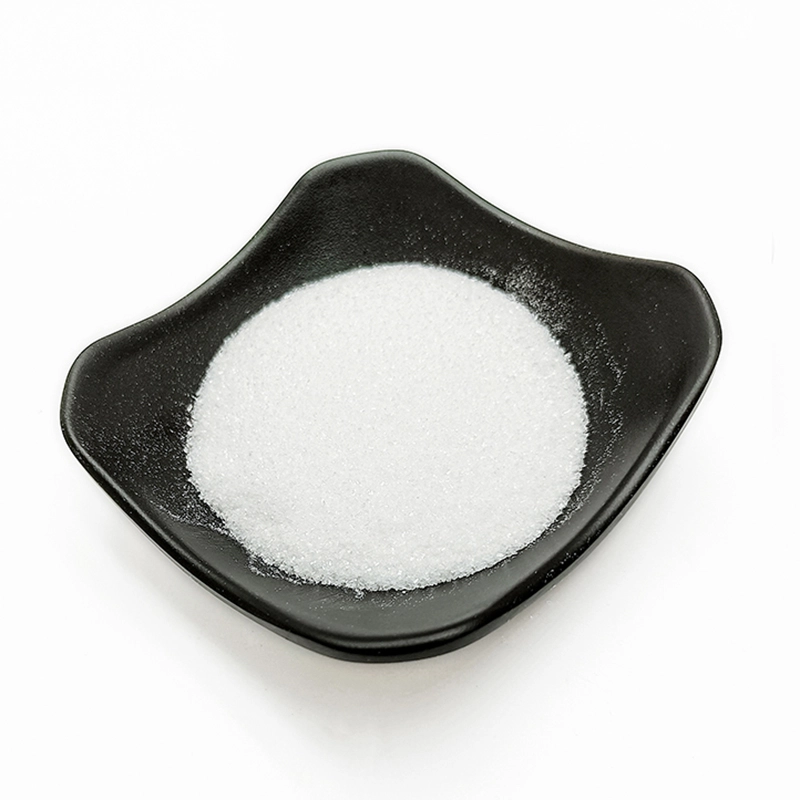
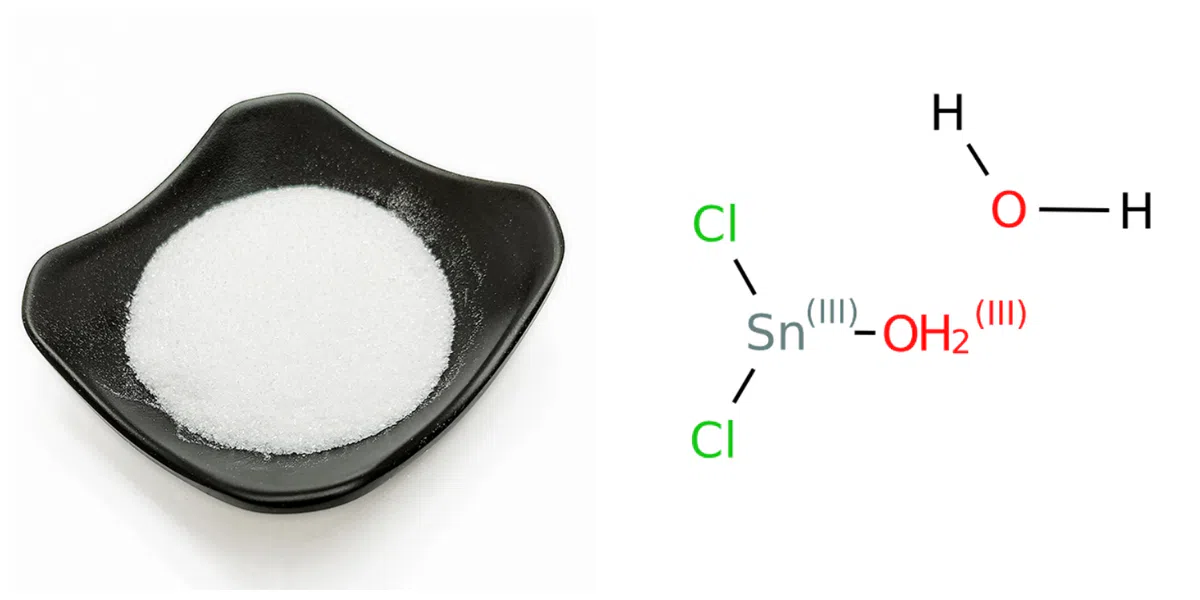
Stannous chloride dihydrate (SnCl₂·2H₂O) is a colorless monoclinic or flaky crystalline solid, with a melting point of 37.7°C and a relative density of 2.71. Upon heating to 100°C, it loses its water of crystallization. Stannous chloride finds broad application in the chemical industry as a reducing agent, mordant, decolorizing agent, and analytical reagent, and is also utilized in electroplating for tin coating.
Anhydrous stannous chloride is produced through the direct reaction of molten tin with chlorine gas, whereas the hydrated form is obtained by reacting flake tin with hydrochloric acid, followed by evaporation and crystallization.
Stannous chloride dihydrate Chemical Properties
| Melting point | 37-38 °C (dec.)(lit.) |
| Boiling point | 652 °C(lit.) |
| density | 2.71 |
| storage temp. | Store at +15°C to +25°C. |
| solubility | hydrochloric acid |
| form | Solid |
| color | White or colorless |
| Specific Gravity | 2.71 |
| PH | 1-2 (100g/l, H2O, 20℃) |
| Water Solubility | 1187 g/L (20 ºC) |
| Sensitive | Air Sensitive |
| Merck | 148,783 |
| Exposure limits | ACGIH: TWA 2 mg/m3 |
| NIOSH: IDLH 100 mg/m3; TWA 2 mg/m3 | |
| Stability: | Stable. Incompatible with strong oxidizing agents, alkali metals, ammonia, alcohols, alkalies, nitrates, boron trifluoride, boron trichloride, carbides. |
| InChIKey | AXZWODMDQAVCJE-UHFFFAOYSA-L |
| CAS DataBase Reference | 10025-69-1(CAS DataBase Reference) |
| EPA Substance Registry System | Tin chloride (SnCl2), dihydrate (10025-69-1) |
Safety Information
| Hazard Codes | C,N |
| Risk Statements | 22-34-68-50/53-48/22-43-20-63 |
| Safety Statements | 26-36/37/39-45-61-60 |
| RIDADR | UN 3260 8/PG 3 |
| WGK Germany | 1 |
| RTECS | XP8850000 |
| TSCA | Yes |
| HazardClass | 8 |
| PackingGroup | II |
| HS Code | 28273910 |
| Toxicity | LD50 orally in Rabbit: 700 mg/kg |
Product Application of Stannous Chloride Dihydrate CAS#10025-69-1
Stannous chloride dihydrate is widely employed as a reducing agent in the production of dye intermediates and also serves as a component in ultra-high-pressure lubricating oils. It functions as a bleaching agent and is used in mirror manufacturing for mercury plating sensitization, where it aids in producing a bright silver film with strong mercury adhesion.