Product Introduction
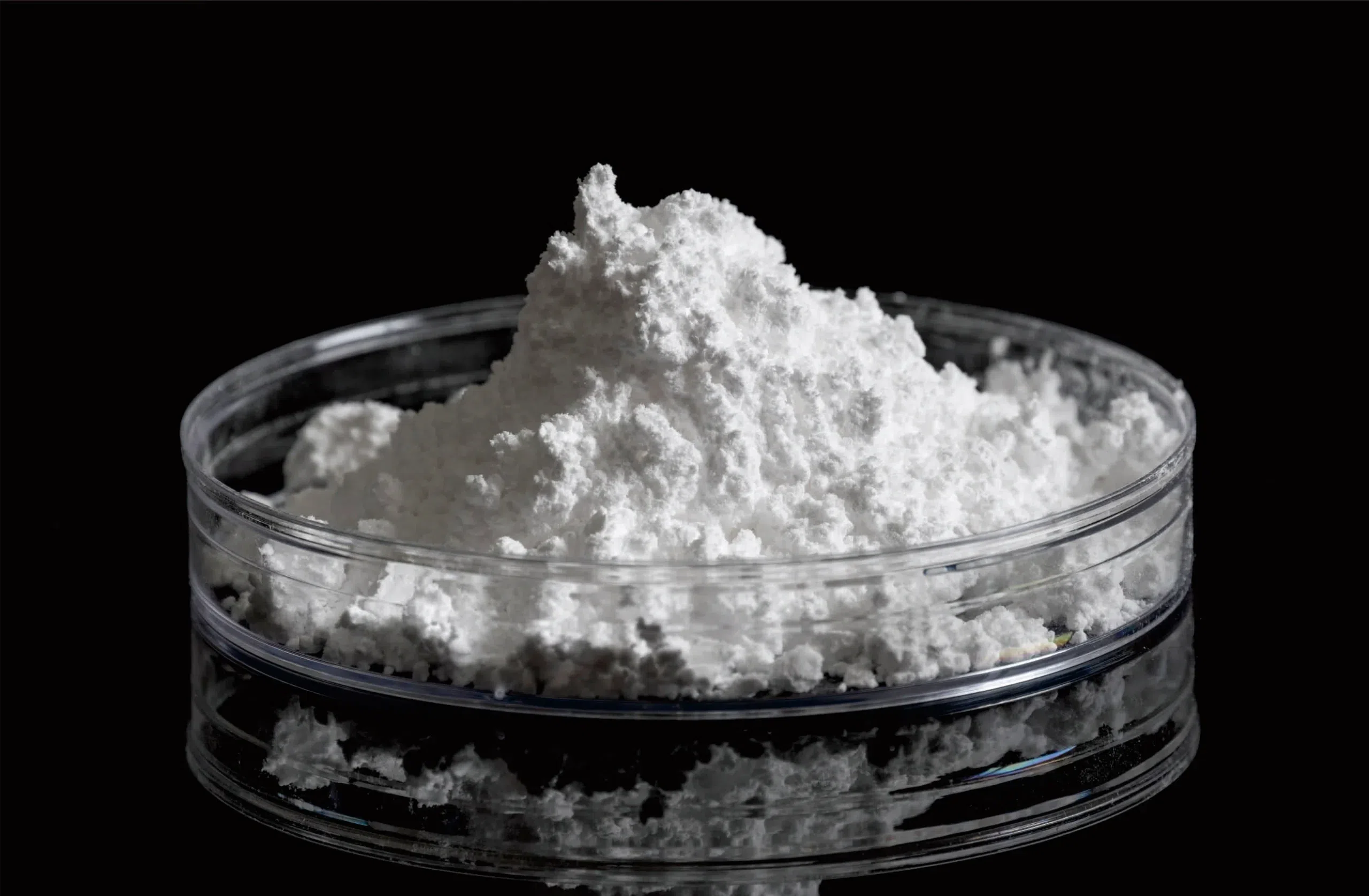
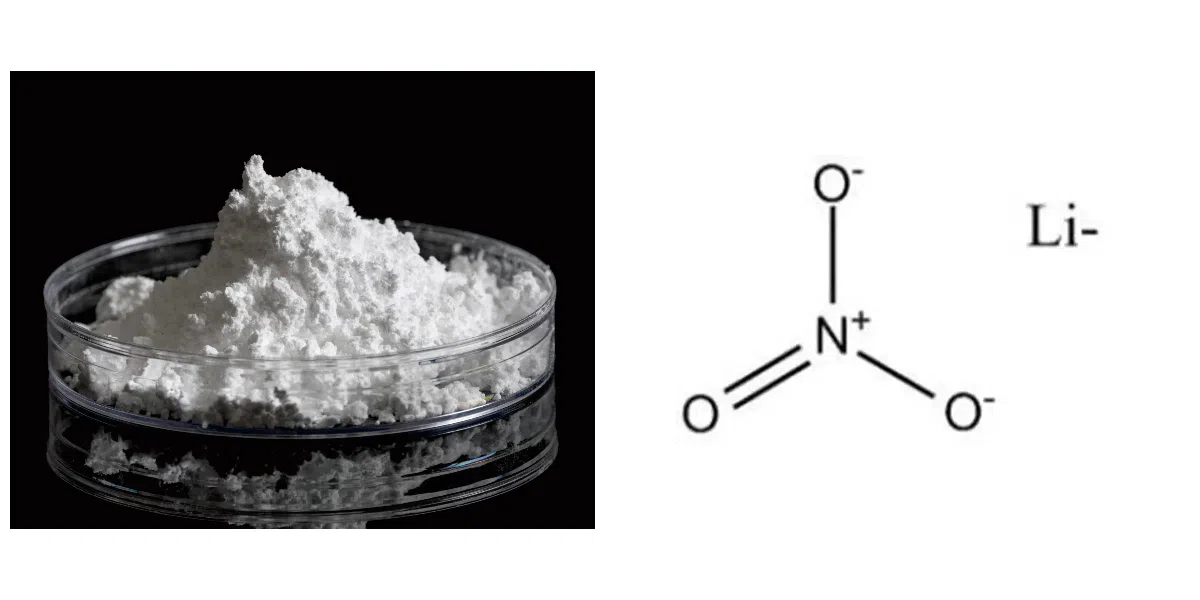
Lithium nitrate (LiNO₃) is an inorganic lithium salt of nitric acid — the lithium analogue of saltpetre. It is a colourless, trigonal (rhombohedral) crystal or white crystalline powder, odourless, freely soluble in water and strongly hygroscopic. It is manufactured industrially by reacting lithium hydroxide or lithium carbonate with nitric acid, then evaporating, crystallising and vacuum-drying the liquor; the anhydrous form is the usual commercial article, while the monohydrate (LiNO₃·H₂O) and trihydrate are also encountered.
Two features govern its industrial value. The lithium ion is small and the salt melts at a modest temperature, so it markedly lowers the melting point of molten-salt baths and ceramic glazes; and the nitrate ion supplies oxidising power, which makes it useful as an oxygen carrier in pyrotechnic and propellant formulations. The same oxidising character is its principal hazard: it must never be stored or handled together with reducing agents, organic matter or metal powders, and it is managed in commerce as a Class 5.1 oxidising substance.
Lithium nitrate melts at about 264 °C and decomposes above roughly 600 °C (with an onset near 450 °C) to lithium oxide and toxic nitrogen oxides. Because it is strongly hygroscopic, it cakes and forms agglomerates on prolonged storage, so packaging must stay sealed and the warehouse dry. In recent years the compound has gained a second, high-technology role as an electrolyte additive for lithium-sulphur and lithium-metal batteries, where the nitrate ion helps build a stable solid-electrolyte interface on the lithium anode, suppresses the polysulfide shuttle and restrains dendrite growth; in some systems it is also used as a cathode-active material.
Physical and Chemical Properties
| Property | Value |
| / colour | / white |
| Density | (at 20 °C) |
| Bulk density | about 1,130 kg/m³ |
| Melting point | about 264 °C |
| Thermal decomposition | decomposes above about 600 °C to lithium oxide and nitrogen oxides |
| Solubility in water | (about 1,020 g/L); soluble in ethanol, pyridine and ammonia |
| (1 mol/L aqueous solution) | (near neutral) |
| Hygroscopicity | undergoes time consolidation and forms agglomerates on prolonged storage |
| Oxidising power | promotes the combustion of organic matter; incompatible with reducing agents, sulfur, metal powders and strong acids |
Product Applications
Lithium nitrate serves three functions in industry: as a lithium source, as an oxidising agent and as a fluxing additive. Its principal outlets are the following.
Ceramics, glazes and enamels — flux that lowers the firing temperature of glazes and vitreous enamels and adjusts their melting behaviour; a classic low-temperature glaze component.
Metallurgy and joining — molten-salt bath component for heat treatment and aluminium brazing flux; the salt provides a stable high-temperature molten medium.
Pyrotechnics and propellants — oxidiser in fireworks, signals and solid propellants; it supplies oxygen to the reaction and burns cleanly relative to other oxidisers.
Lithium batteries — electrolyte additive for lithium-sulphur and lithium-metal batteries, where lithium nitrate builds a stable protective film on the lithium anode and suppresses the polysulfide shuttle and dendrite formation; also the raw material for other lithium salts such as lithium peroxide and lithium manganate.
Refrigeration — corrosion inhibitor and stabiliser in ammonia absorption refrigeration systems and as a component of the working medium.
Glass and static control — glass-etching agent and antistatic additive; used to adjust the properties of glass melts and to reduce surface-charge accumulation in polymers.
Analytical chemistry, heat transfer and others — fluorescence-analysis reagent and lithium standard solution; heat-exchange medium; catalyst and intermediate in organic synthesis; and a component of certain heat-storage salts.