Product Introduction
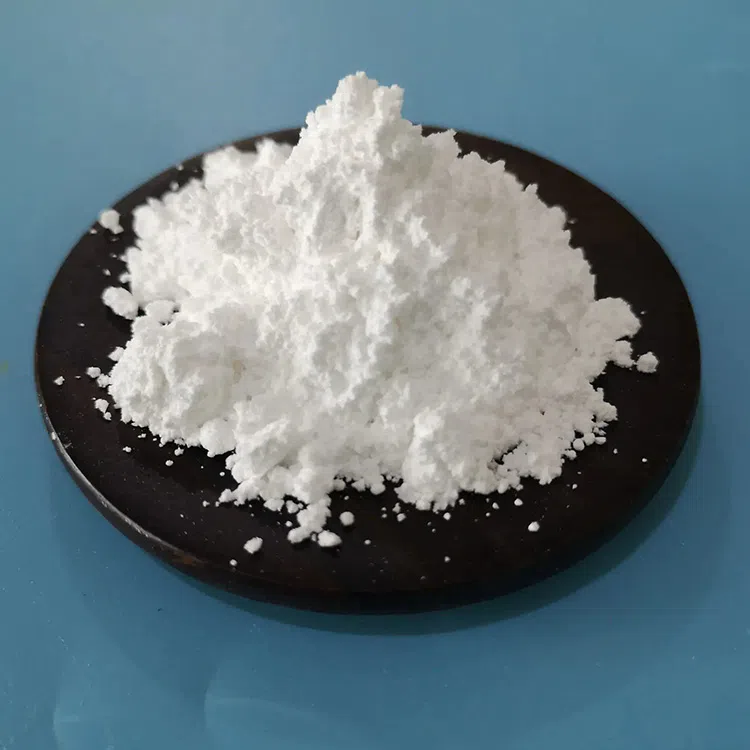
Lithium carbonate (Li₂CO₃) is an inorganic compound and the single most important intermediate in the lithium value chain, widely referred to as “white petroleum”. It is produced from spodumene and lepidolite ores (sulphuric-acid or lime-sinter routes) and from salt-lake brines (evaporation and adsorption routes), and it is the base from which lithium hydroxide, lithium chloride, lithium bromide and lithium metal are derived. Lithium was first identified in 1817 by Johan August Arfwedson in the mineral petalite; commercial lithium production began in 1923, and lithium salts have been used in medicine since the 19th century, with their anti-manic effect confirmed by John Cade in 1948.
Both chemical purity and grade determine the end use. Industrial grade (Li₂CO₃ ≥ 98.5 %) serves glass, ceramics, metallurgy and general lithium-salt manufacture, while battery grade (Li₂CO₃ ≥ 99.5 %) is the primary lithium source for lithium-ion cathode materials — lithium iron phosphate, ternary NCM/NCA, lithium cobalt oxide and lithium manganese oxide — as well as for the electrolyte salt LiPF₆. Impurity control is decisive: Na, Mg, Ca, K and Fe reduce reversible capacity and power output, while magnetic foreign matter and moisture affect cell safety and cycle life. Commercial supply is therefore graded as industrial (≥ 98.5 %), battery (≥ 99.5 %) and high-purity (≥ 99.9 %) material.
Industrial Grade — Chemical Composition (GB/T 11075-2013)
| Item | Li₂CO₃-0 | Li₂CO₃-1 | Li₂CO₃-2 |
| Li₂CO₃, min % | 99.2 | 99.0 | 98.5 |
| Na, max % | 0.08 | 0.15 | 0.20 |
| Fe, max % | 0.0020 | 0.0035 | 0.0070 |
| Ca, max % | 0.025 | 0.040 | 0.070 |
| Mg, max % | 0.015 | — | — |
| SO₄²⁻, max % | 0.20 | 0.35 | 0.50 |
| Cl⁻, max % | 0.010 | 0.020 | 0.030 |
| HCl-insoluble matter, max % | 0.005 | 0.015 | 0.050 |
| Moisture, max % | 0.30 | 0.30 | 0.50 |
Battery Grade — Chemical Composition (YS/T 582-2023, D-series)
| Li₂CO₃, min % | 99.5 |
| Moisture (H₂O), max % | 0.20 |
| Loss on ignition, max % | 0.50 |
| Na, max % | 0.025 |
| K, max % | 0.001 |
| Ca, max % | 0.008 |
| Mg, max % | 0.008 |
| Fe, max % | 0.001 |
| B (boron), max % | 0.001 — added in the 2023 edition |
| SO₄²⁻, max % | 0.080 |
| Cl⁻, max % | 0.005 |
| Magnetic foreign matter, max | ≤ 300 µg/kg (standard); ≤ 50 µg/kg (D1) |
| Particle size | d₁₀ ≥ 1 µm · 4 µm ≤ d₅₀ ≤ 8 µm · 9 µm ≤ d₉₀ ≤ 15 µm · d₉₉ ≤ 30 µm |
Product Applications
Lithium carbonate acts as a lithium source, a flux and a chemical intermediate; the grade selected determines the application.
Battery cathode materials — the primary lithium source for LFP, NCM/NCA ternary, LCO and LMO cathodes used in electric-vehicle, energy-storage and consumer cells; battery applications now account for the large majority of global lithium carbonate consumption.
Battery chemicals — feedstock for battery-grade lithium hydroxide, the electrolyte salt LiPF₆, lithium chloride and lithium metal.
Glass and ceramics — flux in heat-resistant and speciality glass, ceramic glazes, microcrystalline glass and frits; lowers the melting temperature and improves surface gloss.
Aluminium electrolysis and metallurgy — 0.4–1.5 % Li₂CO₃ in carbon anodes lowers anode over-voltage by 150–200 mV and cuts HF emissions by nearly 30 %; also used as an additive and refining flux in copper and aluminium alloys.
Lubricating greases and industrial chemicals — lithium stearate and lithium-based greases, lithium bromide absorption chillers, and a wide range of lithium salts.
Pharmaceuticals — lithium carbonate is a long-established mood stabiliser used in the treatment of bipolar disorder and mania.
High-purity and speciality uses — optical crystals, electronic ceramics, ferrites, phosphors and catalysts, plus recovery of end-of-life batteries back to battery-grade lithium carbonate.