Product Description of Dimethyl Carbonate CAS#616-38-6
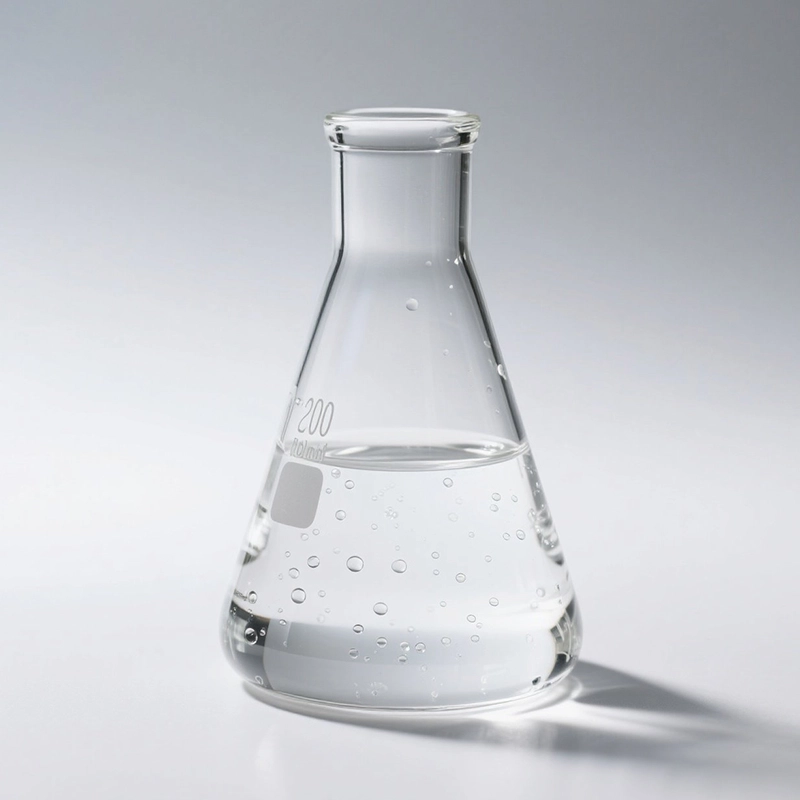
At room temperature, dimethyl carbonate (DMC) appears as a clear, colorless liquid with a distinctive smell. Its relative density (D20/4) is 1.0694, with a melting point of 4°C, a boiling point of 90.3°C, and flash points of 21.7°C (open cup) and 16.7°C (closed cup). Its refractive index (nD20) is 1.3687.
This compound is flammable and exhibits low toxicity. It mixes completely with a wide range of organic solvents—including alcohols, ketones, and esters—in any proportion, but shows only limited solubility in water. As a methylating agent, DMC is highly effective and offers distinct environmental and safety advantages over traditional reagents like methyl iodide and dimethyl sulfate, being both far less toxic and more readily biodegradable.
Older manufacturing routes relying on phosgene have largely been abandoned. Today, DMC is predominantly produced via the catalytic oxidative carbonylation of methanol in the presence of oxygen—a process regarded as more eco-friendly.
DMC is suitable for methylating various substrates, including aniline, phenol, and carboxylic acids. Some of these reactions may require elevated pressures, and in the case of carboxylic acid methylation, the addition of DBU under reflux conditions can serve as an effective catalyst.
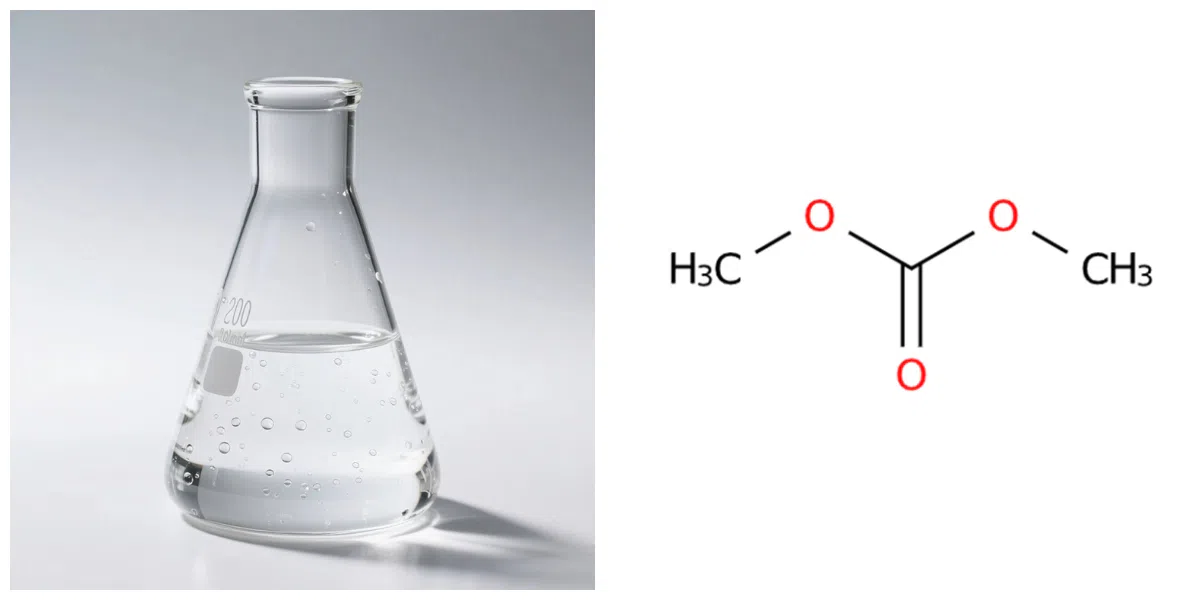
Dimethyl carbonate Chemical Properties
| Melting point | 2-4 °C (lit.) |
| Boiling point | 90 °C (lit.) |
| density | 1.069 g/mL at 25 °C (lit.) |
| vapor density | 3.1 (vs air) |
| vapor pressure | 18 mm Hg ( 21.1 °C) |
| refractive index | n20/D 1.368(lit.) |
| Fp | 65 °F |
| storage temp. | Store below +30°C. |
| solubility | 139g/l |
| form | Liquid |
| color | <50(APHA) |
| Odor | Pleasant |
| explosive limit | 4.22-12.87%(V) |
| Water Solubility | 139 g/L |
| Sensitive | Moisture Sensitive |
| Merck | 143241 |
| BRN | 635821 |
| Dielectric constant | 3.17 |
| Stability: | Stable. Highly flammable. Incompatible with strong oxidizing agents, potassium t-butoxide. |
| InChIKey | IEJIGPNLZYLLBP-UHFFFAOYSA-N |
| LogP | 0.23-0.354 at 20-25℃ |
| CAS DataBase Reference | 616-38-6(CAS DataBase Reference) |
| NIST Chemistry Reference | Carbonic acid, dimethyl ester(616-38-6) |
| EPA Substance Registry System | Carbonic acid, dimethyl ester (616-38-6) |
Safety Information
| Hazard Codes | F |
| Risk Statements | 11 |
| Safety Statements | 9-16-2017/9/16 |
| RIDADR | UN 1161 3/PG 2 |
| WGK Germany | 1 |
| RTECS | FG0450000 |
| Autoignition Temperature | 458 °C |
| TSCA | Yes |
| HS Code | 2920 90 10 |
| HazardClass | 3 |
| PackingGroup | II |
| Hazardous Substances Data | 616-38-6(Hazardous Substances Data) |
| Toxicity | LD50 in rats (g/kg): 13.8 orally; 2.5 dermally; LC50 (4 hr) in rats (mg/l): 140 by inhalation (Ono) |
Product Application of Dimethyl Carbonate CAS#616-38-6
Dimethyl carbonate sees extensive use as a solvent in organic synthesis and is viewed as an eco-friendly replacement for conventional solvents like methyl ethyl ketone, tert-butyl acetate, and parachlorobenzotrifluoride.
It also serves as a key intermediate in the synthesis of diphenyl carbonate, which itself is a crucial precursor for producing Bisphenol‑A polycarbonate. Beyond that, DMC acts as a green methylating agent for compounds such as aniline, phenols, and carboxylic acids.
Thanks to its high oxygen content, it can be added to fuels as an oxygenate. DMC is also utilized in the fields of supercapacitors and lithium batteries.
As an environmentally benign chemical, DMC is recognized as a safer substitute for dimethyl sulfate and methyl halides in methylation reactions, and as an alternative to phosgene in methoxycarbonylation and carbonylation processes.