Products Description of Carbon Black CAS#1333-86-4
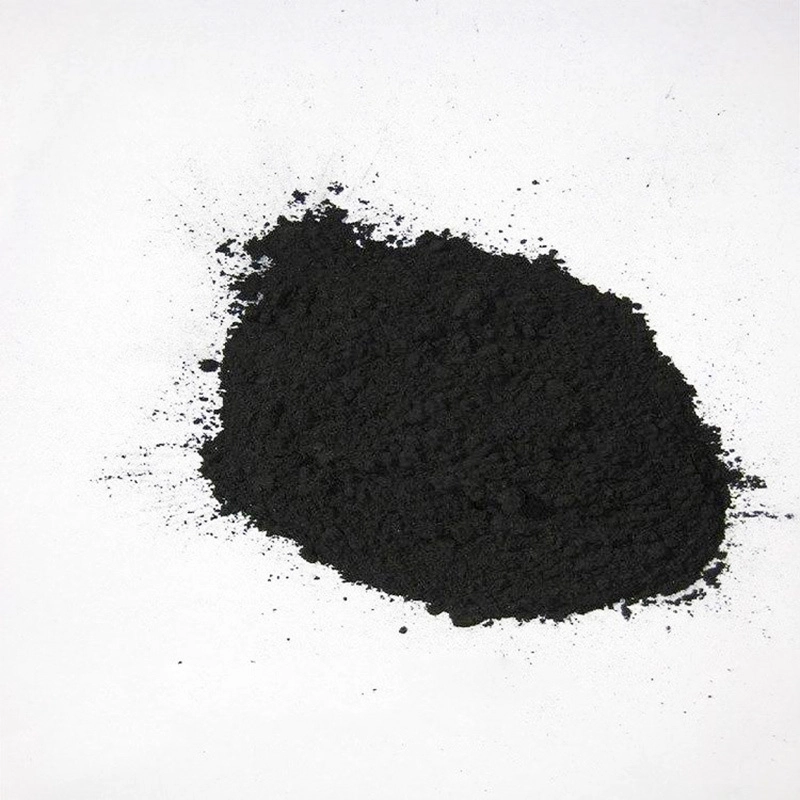
Carbon black is a finely divided carbon material with a broad range of industrial applications. When dispersed in air, it may present a fire or explosion hazard in the presence of an ignition source, and can undergo slow spontaneous combustion upon exposure to water. Due to its extremely fine particle size, inhalation exposure must be controlled, with an occupational exposure limit (TLV) of 3.5 mg/m³ in air.
Carbon black is primarily used in the production of tires, rubber goods, plastics, carbon paper, printing inks and solar energy absorption materials. It is also widely employed across industries as a black pigment, reinforcing filler, conductive additive and functional material.
In the food industry, carbon black can be used as an edible black pigment and food colorant. Within regulated usage limits, it is applicable to products such as pastries, rice products, flour based foods, candies, biscuits and other food items.
Carbon Black Chemical Properties
| Melting point | 3550 °C(lit.) |
| Boiling point | 500-600 °C(lit.) |
| density | ~1.7 g/mL at 25 °C(lit.) |
| vapor pressure | <0.1 mm Hg ( 20 °C) |
| Fp | >230 °F |
| solubility | H2O: soluble0.1mg/mL |
| form | rod |
| color | Clear colorless |
| Specific Gravity | bulk 0.10/g/cm3 |
| Water Solubility | Insoluble |
| Merck | 141808 |
| Exposure limits | ACGIH: TWA 3 mg/m3 |
| OSHA: TWA 3.5 mg/m3 | |
| NIOSH: IDLH 1750 mg/m3; TWA 3.5 mg/m3; TWA 0.1 mg/m3 | |
| Dielectric constant | 2.5(Ambient) |
| Stability: | Stable. Combustible. |
| InChIKey | VNWKTOKETHGBQD-UHFFFAOYSA-N |
| LogP | 1.090 (est) |
| IARC | 2B (Vol. Sup 7, 65, 93) 2010 |
| EPA Substance Registry System | Carbon black (1333-86-4) |
| Hazard Codes | |
| OEB | B |
| OEL | TWA: 3.5 mg/m3 |
| WGK Germany | 3 |
| RTECS | FF5250100 |
| TSCA | Yes |
| Hazardous Substances Data | 1333-86-4(Hazardous Substances Data) |
| Toxicity | LD50 oral in rat: > 15400mg/kg |
| IDLA | 1,750 mg/m3 |
Product Application
In the rubber industry, carbon black serves as a key reinforcing filler that significantly improves the mechanical properties of rubber products. It is widely used in automotive tires, treads, sidewalls, solid tires, conveyor belts, hoses, industrial rubber goods, and other applications. Through reinforcement with carbon black, vulcanized rubber exhibits enhanced tensile strength, abrasion resistance, elongation, and tear resistance, making it suitable for high performance tires, engineering tires, and industrial rubber components.
Carbon black is also employed as a coloring pigment in paints, coatings, and inks. It is used in the production of black paper, packaging for photographic materials, carbon paper, typewriter ribbons, shoe polish, leather coatings, colored cement, and other black colored materials.
Owing to its excellent electrical conductivity, carbon black functions as a conductive agent in lithiumion batteries, electronic components, antistatic rubber products, electrodes, and electrical brushes. It is further utilized in plastics, metallurgy, rocket propellants, and other specialized fields.
With its multifunctional properties, carbon black remains an essential raw material for rubber reinforcement, pigmentation, conductivity enhancement, and industrial material modification. Proper storage and handling procedures should be followed to ensure safe use.