Product Details
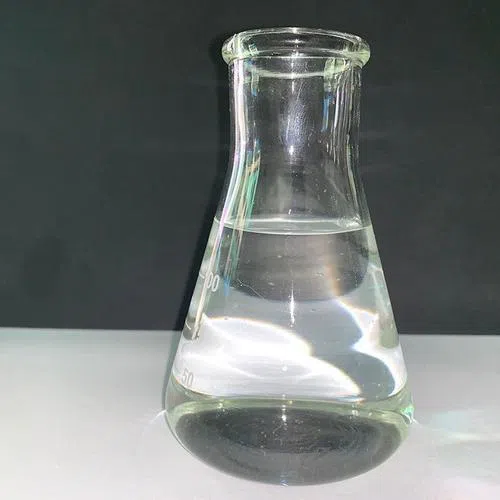
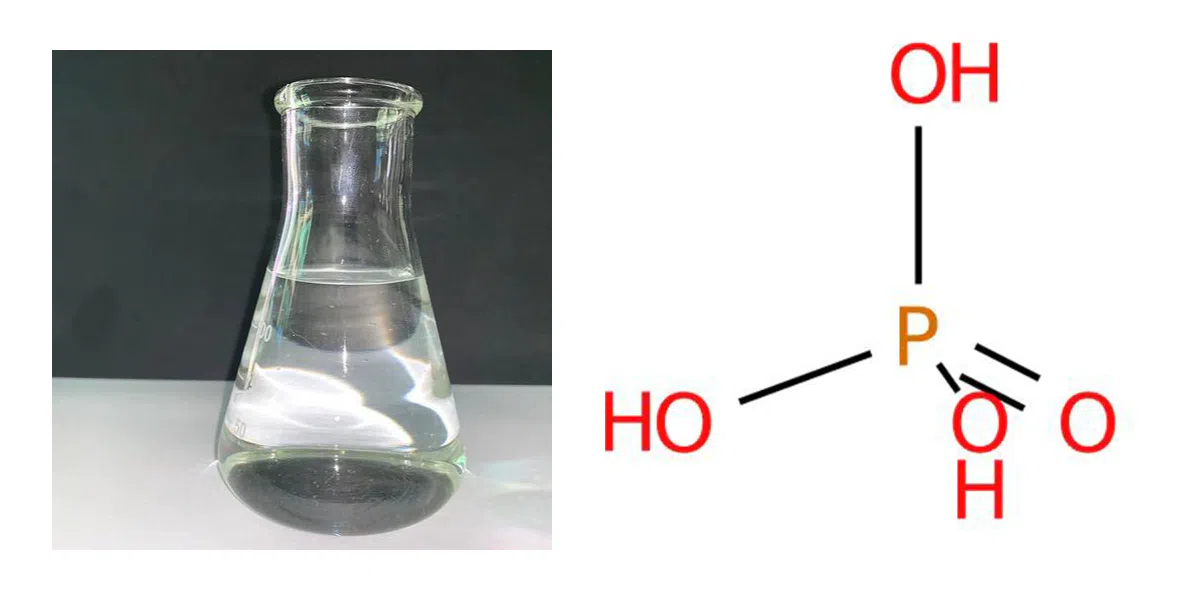
Our industrial and food-grade phosphoric acid (orthophosphoric acid, H₃PO₄) is supplied in high-purity form: pure grade is odorless, highly sour, presented as clear thick liquid or orthorhombic crystals, while our 85% standard product is a colorless faint syrupy liquid. It features a 42.35°C melting point, 1.70 specific gravity, and full miscibility with water at any mixing ratio.
This moderately strong inorganic acid is far less aggressive than strong acids such as sulfuric, hydrochloric and nitric acid, but delivers higher acidity than acetic, boric and carbonic acid. It dissolves easily in both water and ethanol, and reacts with sodium carbonate to produce different acidic salts under different pH values. Note that it may cause skin irritation and tissue inflammation, and heated concentrated phosphoric acid corrodes porcelain containers. Our product is highly hygroscopic, so it should be stored in fully sealed containers. The standard commercial 82% H₃PO₄ thick solution gets its stable viscosity from uniform internal hydrogen bonding, ensuring consistent performance for your production.
Product Features
| Melting point | ~40 °C(lit.) |
| Boiling point | 158 °C(lit.) |
| density | 1.685 g/mL at 25 °C(lit.) |
| vapor density | 3.4 (vs air) |
| vapor pressure | 2.2 mm Hg ( 20 °C) |
| refractive index | n20/D 1.433 |
| FEMA | 2900 | PHOSPHORIC ACID |
| storage temp. | no restrictions. |
| solubility | H2O: soluble |
| pka | 2.1-7.2-12.3(at 25℃) |
| form | Solid or Viscous Liquid |
| Specific Gravity | 1.7 |
| color | ≤10(APHA) |
| PH | 3.06(1 mM solution);2.26(10 mM solution);1.63(100 mM solution); |
| Odor | Odorless |
| PH Range | 1.5 |
| biological source | synthetic |
| Water Solubility | MISCIBLE |
| λmax | λ: 260 nm Amax: ≤0.05 λ: 280 nm Amax: ≤0.04 |
| Merck | 14,7344 |
| BRN | 1921286 |
| Exposure limits | TLV-TWA 1 mg/m3 (ACGIH, MSHA, and OSHA); TLV-STEL 3 mg/m3 (ACGIH). |
| Dielectric constant | 61.0 |
| InChIKey | NBIIXXVUZAFLBC-UHFFFAOYSA-N |
| LogP | -2.15 |
| CAS DataBase Reference | 7664-38-2(CAS DataBase Reference) |
| NIST Chemistry Reference | Phosphoric acid(7664-38-2) |
| EPA Substance Registry System | Phosphoric acid (7664-38-2) |
| Hazard Codes | C,Xn,T,F |
| Risk Statements | 34-35-22-39/23/24/25-36/38-23/24/25-11 |
| Safety Statements | 7-16-26-36/37-45-36/37/39-1/2-24/25 |
| RIDADR | UN 3453 8/PG 3 |
| OEB | C |
| OEL | TWA: 1 mg/m3, STEL: 3 mg/m3 |
| WGK Germany | 3 |
| RTECS | TB6300000 |
| F | 3-10 |
| TSCA | Yes |
| HS Code | 2809 20 00 |
| HazardClass | 8 |
| PackingGroup | III |
| Hazardous Substances Data | 7664-38-2(Hazardous Substances Data) |
| Toxicity | ADI 0 to 70 mg / kg (total phosphate content in terms of phosphorus, FAO / WHO, 2001). GRAS (FDA, § 182.1073, 2000). LD501530mg / kg (rat, oral). In case of daily intake of 2 ~ 4 g, it can cause mild diarrhea. The amount of sour agent used as a cola drink is 0.02% to 0.06%. |
| IDLA | 1,000 mg/m3 |
Product application
Agrochemical & Phosphate Manufacturing
Core raw material for producing superphosphate fertilizers, various phosphate salts and polyphosphate derivatives, supporting large-scale agrochemical production .
Industrial Metal Surface Treatment
Widely used as metal cleaning agent, chemical polishing agent and pre-painting rust-proof treatment solution, effectively removing surface oxide layers for steel and non-ferrous metals .
Food & Beverage Processing
GRAS/FEMA 2900 certified as food acidulant, flavor regulator and antioxidant synergist, commonly added to cola, root beer and other beverages to deliver balanced sourness .
Fine Chemical & Pharmaceutical Field
Serves as acid catalyst for ethylene synthesis and hydrogen peroxide purification, also acts as a pharmaceutical solvent and pH regulator in drug production .
New Energy & Advanced Manufacturing
High-purity grade is a critical raw material for lithium iron phosphate battery manufacturing, supporting high-performance new energy battery production .
Laboratory & Analytical Applications
Qualified as ACS-grade analytical reagent, used for ³¹P NMR chemical shift calibration of phospholipids and various standard chemical titration experiments .
Other Industrial Scenarios
Applied in detergent formulation, dental cement production, rubber latex coagulation and industrial process engraving, covering multiple downstream industrial chains .