Product Details
DOW Product Description — ETHYLENE OXIDE, CAS# 75-21-8
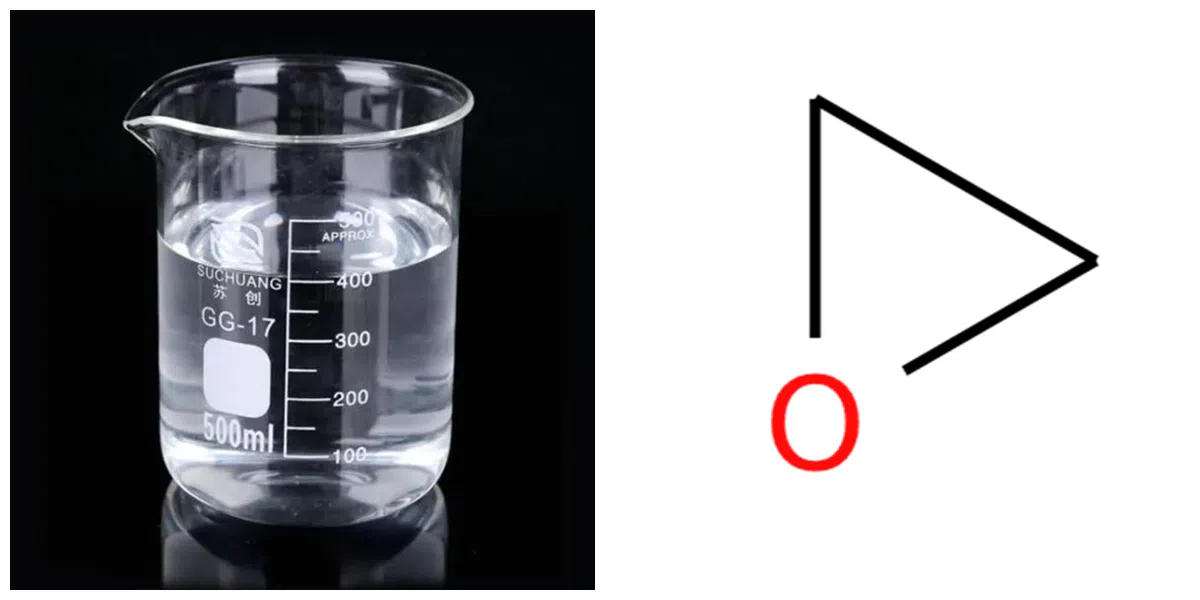
Ethylene oxide, also referred to as oxirane or oxane, ranks among the simplest of the cyclic ethers. At ambient temperature it exists as a colorless, flammable gas; below 10.7 °C it condenses into a colorless, free-flowing liquid and carries a distinctive ether-like odor. Its vapors irritate the eyes and the nasal mucosa.
This compound is fully miscible with water, ethanol, alcohols, and ether. Owing to its high chemical reactivity, it readily enters into addition reactions with numerous compounds. When mixed with air it can form explosive atmospheres, with explosive limits spanning 3% to 100% by volume.
Ethylene oxide is a substance of high toxicity. Its allowable concentration in air is 100 PPM, and inhaling it may result in anesthetic poisoning.
As a major fine chemical feedstock, ethylene oxide is widely employed in producing key derivatives such as ethylene glycol, nonionic surfactants, ethanolamines, and ethylene glycol ethers. It further acts as a precursor to thousands of downstream products — among them synthetic detergents, emulsifiers, antifreeze agents, plasticizers, lubricants, pesticides, and fumigants — giving it exceptionally broad industrial reach.
Parameters
| English Name | ETHYLENE OXIDE |
| English Synonyms | ETHYLENE OXIDE, 99.5+%6;ETHYLENE OXIDE CYLINDER WITH 2 L (NET ~1.5 KG);ETHYLENE OXIDE, 1X1ML, MEOH, 50000UG/ML;ETHYLENE OXIDE 1X1ML, CH2CL2, 2000UG/ML;ETHYLENE OXIDE, CYLINDER WITH 27 L (NET ~20 KG);ETHYLENE OXIDE, 1X1ML, CH2CL2, 50000UG/M L;ETHYLENE OXIDE, PRESSURE TIN WITH 2 50 ML (NET ~225 G);etylenutlenek(polish) |
| CAS Number | 75-21-8 |
| Molecular Formula | C2H40 |
| Molecular Weight | 44.05 |
| EINECS Number | 200-849-9 |
| Melting Point | -111 °C(lit.) |
| Boiling Point | 10.7 °C(lit.) |
| Density | 0.882 g/mL at 25 °C(lit.) |
| Vapor Pressure | 1095 mmHg at 20°C |
| Refractive Index | n20/D 1.3597(lit.) |
| Flash Point | <-17.7℃ |
| Storage Conditions | 2-8℃ |
| Form | Colorless gas |
| Odor (Odor) | Detectable sweet taste from 257 to 690 ppm |
| Merck | 3802 |
| BRN | 102378 |
| Henry's Law | 5.8x10⁻² mol/(m3Pa) at 25C, Conway et al. (1983) |
| Constant | TLV-TWA 1.8 mg/m3 (1 ppm) (ACGIH), 0.18 mg/m3 (0.1 ppm), 5 ppm/10 min (NIOSH). |
| Exposure Limits | 14.0 (-4℃) |
| Dielectric Constant | agriculture |
| InChI | 1S/C2H4O/c1-2-3-1/h1-2H2 |
| InChIKey | IAYPIBMASNFSPL-UHFFFAOYSA-N |
| SMILES | C1CO1 |
| LogP | -0.3 |
Ethylene Oxide – Properties and Applications
Sterilization and Fumigation
Ethylene oxide is strongly bactericidal, does not attack metals, and leaves no lingering odor behind. Owing to these traits, it serves well as a gaseous sterilizing agent for a wide variety of materials. It is generally supplied as blends such as ethylene oxide/carbon dioxide (90:10) or ethylene oxide/dichlorodifluoromethane, and its principal application is the sterilization of medical facilities and precision instruments.
Fumigation with ethylene oxide also sees broad use in preserving grains and foodstuffs. In one case, dried egg powder held in storage may spoil through microbial action; treating it with ethylene oxide reliably prevents such spoilage while leaving its chemical composition — amino acids included — unchanged.
Acid Regulation
Because it reacts readily with acids, ethylene oxide can act as an acid-regulating additive, helping to lower acidity or to keep certain materials from gradually acidifying over time. In chlorinated butyl rubber production, for example, introducing ethylene oxide into the isobutylene-isoprene copolymer solution ahead of chlorination eliminates the need to wash the finished product with alkali or water afterward.
Propulsion Fuel
Ethylene oxide can also release considerable energy when it undergoes autodecomposition, which makes it suitable for use as a component of rocket and jet propulsion fuels. It is usually blended with nitromethane (60:40–95:5); such mixtures offer good combustion performance, a low freezing point, and comparatively stable behavior with a reduced explosion risk.
Overall Position and Toxicity
Broadly speaking, direct consumption of ethylene oxide in these applications is fairly limited. Within the ethylene industry it stands as an important derivative second only to polyethylene, and its chief value lies in the wide range of downstream products derived from it — the diversity of ethylene oxide derivatives exceeds that of most other ethylene-based chemicals.
Ethylene oxide is approximately 27 times more toxic than ethylene glycol, with a toxicity comparable to that of ammonia. Once inside the human body, it can be metabolized into formaldehyde, ethylene glycol, and oxalic acid; these compounds affect the central nervous system, irritate mucous membranes, and are toxic to cellular protoplasm.