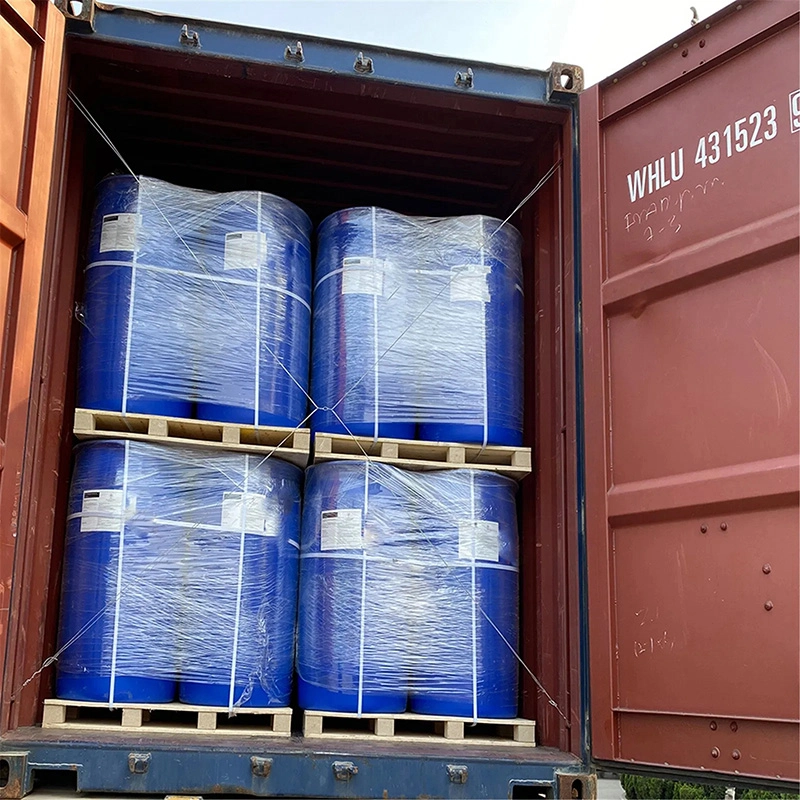
Product Description of Formaldehyde CAS#50-00-0
Formaldehyde is the simplest member of the aldehyde family, exhibiting pronounced chemical reactivity and a certain level of toxicity. At ordinary temperatures, it is a colorless gaseous substance with a strong, unpleasant odor, and it is prone to polymerization, yielding polyformaldehyde.
It demonstrates excellent solubility in water, alcohols, and a number of other organic solvents. Major environmental sources of formaldehyde stem from fuel combustion processes, industrial manufacturing, building and renovation materials, and a wide array of everyday consumer products.
Formaldehyde Chemical Properties
| Melting point | -15°C |
| Boiling point | 97°C(37% solution),-19.5°C(pure) |
| density | 1.09 g/mL at 25 °C(lit.) |
| vapor density | 1.03 (vs air) |
| vapor pressure | 52 mm Hg ( 37 °C) |
| refractive index | n20/D 1.377 |
| Fp | 133 °F |
| storage temp. | room temp |
| solubility | water: soluble |
| form | Solution |
| pka | 13.27(at 25℃) |
| color | APHA: ≤10 |
| Odor | Pungent odor detectable at 1 ppm |
| PH | pH (25℃) : 7.0~7.5 |
| Odor Threshold | 0.5ppm |
| Water Solubility | soluble |
| λmax | λ: 260 nm Amax: 0.01 |
| λ: 280 nm Amax: 0.01 | |
| Merck | 144235 |
| BRN | 1209228 |
| Henry's Law Constant | 2.08(x 10-7 atm?m3/mol) at 25 °C (flow-type generation system, spectrophometry, Kanda et al., 2005) |
| Dielectric constant | 23.0(Ambient) |
| Exposure limits | NIOSH REL: TWA 0.016 ppm, 15-min C 0.1 ppm, IDLH 20 ppm; OSHA PEL: TWA 0.75 ppm, STEL 2 ppm. |
| InChIKey | WSFSSNUMVMOOMR-UHFFFAOYSA-N |
| LogP | 0.35 |
| CAS DataBase Reference | 50-00-0(CAS DataBase Reference) |
| IARC | 1 (Vol. Sup 7, 62, 88, 100F) 2012 |
| NIST Chemistry Reference | Formaldehyde(50-00-0) |
| EPA Substance Registry System | Formaldehyde (50-00-0) |
Safety Information
| Hazard Codes | T |
| Risk Statements | 23/24/25-34-40-43-39/23/24/25-68-45-68/20/21/22 |
| Safety Statements | 36/37-51-45-36/37/39-26-53 |
| RIDADR | UN 1198 3/PG 3 |
| OEB | E |
| OEL | TWA: 0.016 ppm, Ceiling: 0.1 ppm [15-minute] |
| WGK Germany | 2 |
| RTECS | LP8925000 |
| F | 10 |
| Autoignition Temperature | 424 °C for formalin containing 15% methanol |
| TSCA | Yes |
| HazardClass | 3 |
| PackingGroup | III |
| HS Code | 29121100 |
| Hazardous Substances Data Toxicity | 50-00-0(Hazardous Substances Data) |
| LD50 oral (rat) 500 mg/kg | |
| LD50 skin (rabbit) 270 mg/kg | |
| LC50 inhal (rat) 203 mg/m3 (2 h) | |
| PEL (OSHA) 1 ppm (1.5 mg/m3) | |
| TLV-TWA (ACGIH) 0.3 ppm (ceiling)(0.37 mg/m3) | |
| STEL (OSHA) 2 ppm (2.5 mg/m3) | |
| IDLA | 20 ppm |
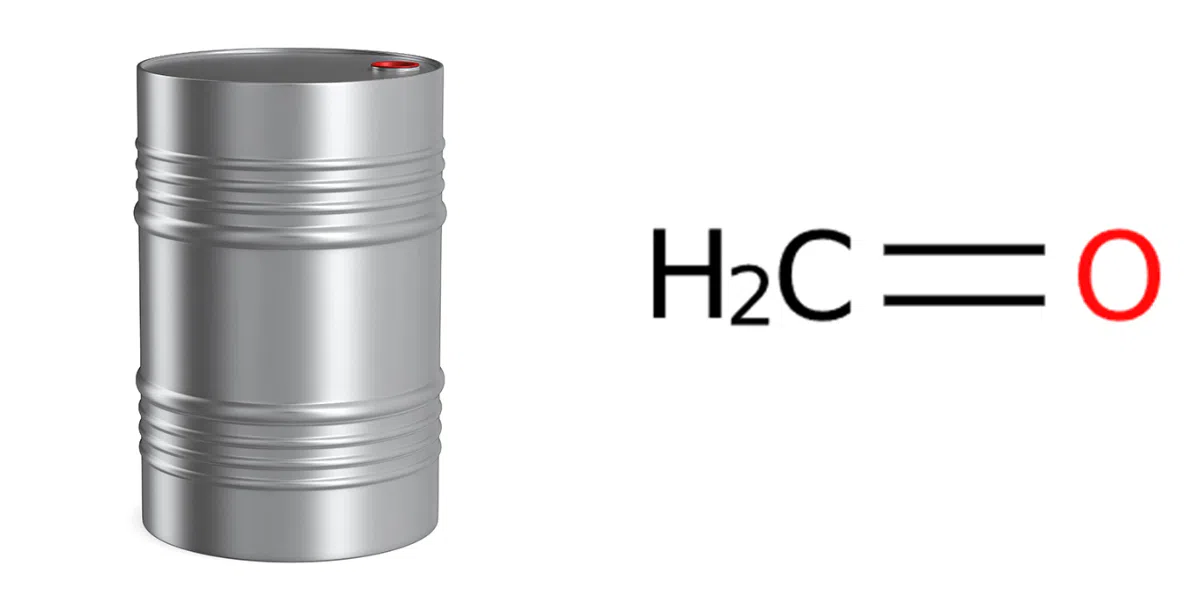
Product Application of Formaldehyde CAS#50-00-0
Formaldehyde is a strong reducing agent with notable bactericidal efficacy. It is employed as a disinfectant for human applications, as well as an antiseptic and fumigation agent for animal use.
As a fundamental organic chemical intermediate, formaldehyde is broadly used in the production of a wide range of products, including pharmaceuticals, synthetic fibers, synthetic resins, plastic preservatives, reducing agents, and other chemical derivatives. Its principal areas of consumption are phenolic resins, urea-formaldehyde resins, melamine resins, and polyoxymethylene resins.
In addition, formaldehyde is used in the production of MDI, pentaerythritol, hexamethylenetetramine, and 1,4-butanediol. It also has applications in chromatographic analysis, disinfection and sterilization operations, the production of phenolic resins, and the preservation and fixation of biological specimens.